

Kiwi For athletes: the evidence-based benefits
If you’ve been scrolling lately and keep seeing kiwi pop up in conversations, you’re not imagining it.
This small, fuzzy fruit is starting to get real attention in the performance world. And while it might not be the first thing you think of when it comes to fueling, the research is giving us some interesting reasons to take a closer look.
Here’s what you need to know.
What is a Kiwi?
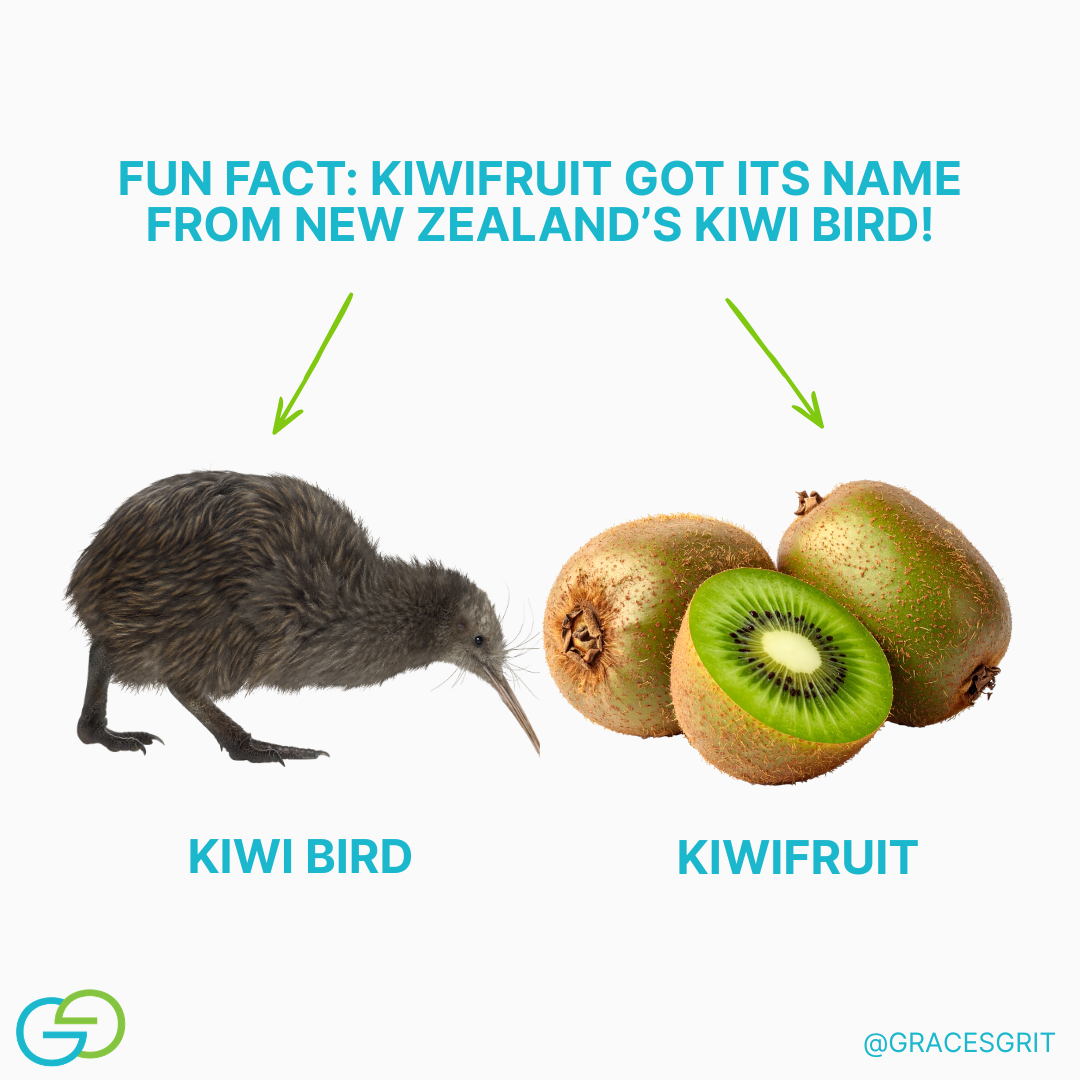
Kiwi, also known as kiwifruit, actually originated in China, where it was first called “yang tao.” It made its way to New Zealand in the early 1900s and was originally called the “Chinese Gooseberry.” Then in 1959, it was renamed “kiwifruit,” inspired by New Zealand’s small, brown, fuzzy bird.
What’s Actually in a Kiwi?
Kiwifruit is one of those foods that really pulls its weight.
Kiwifruit is a sweet-tart, nutrient-dense fruit packed with vitamin C, K, and E, along with fiber and potassium. On top of that, kiwi contains antioxidants and natural compounds like serotonin and melatonin, which play a role in sleep and recovery. It also has a unique enzyme called actinidin that helps support digestion.
So while it’s small, there’s actually a lot going on here.
So… Why is Kiwi Trending For Athletes?
Research is exploring kiwi as a functional fruit, with potential roles in:
Gut health and Digestion - Supporting regularity and overall GI comfort
Sleep Quality and Recovery - Potential effects on sleep duration and quality
Antioxidant Capacity - Helping combat exercise-induced oxidative stress
Let’s talk about what the research is saying!
Kiwi and Digestion
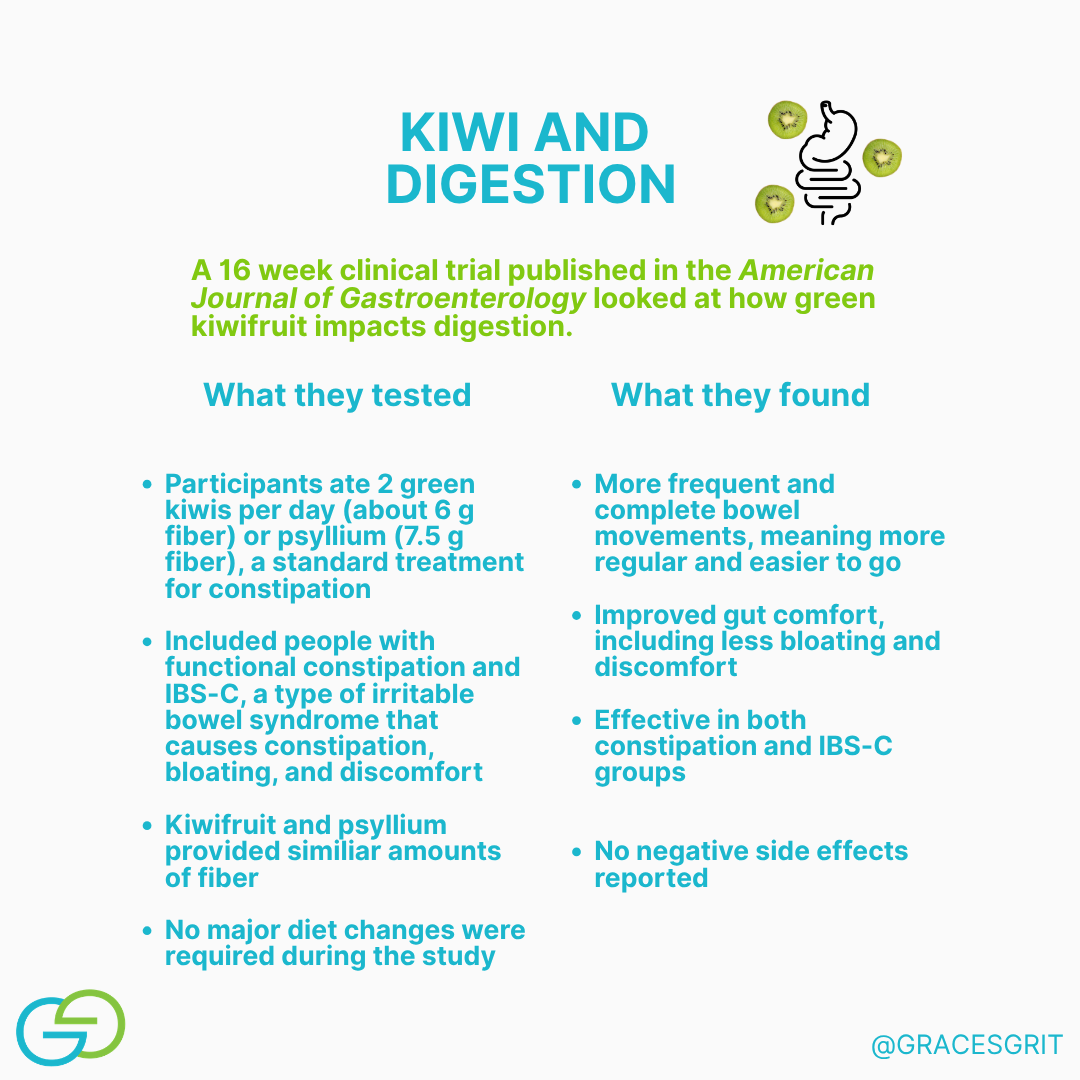
One clinical trial published in the American Journal of Gastroenterology looked at how green kiwifruit impacts digestion over 16 weeks.
Here’s what they did:
Participants ate either 2 green kiwis per day (about 6 grams of fiber) or psyllium (7.5 grams of fiber), which is a standard treatment for constipation. The study included people with functional constipation and IBS-C, a type of irritable bowel syndrome that causes constipation, bloating, and discomfort. Importantly, there were no major diet changes required during the study.
Here’s what they found:
Participants experienced more frequent and complete bowel movements, meaning things were more regular and easier overall. They also reported improved gut comfort, including less bloating and discomfort. These results were seen in both the constipation and IBS-C groups, and no negative side effects were reported.
For athletes dealing with GI discomfort, especially during training season, this is a pretty interesting finding.
Kiwi and Sleep
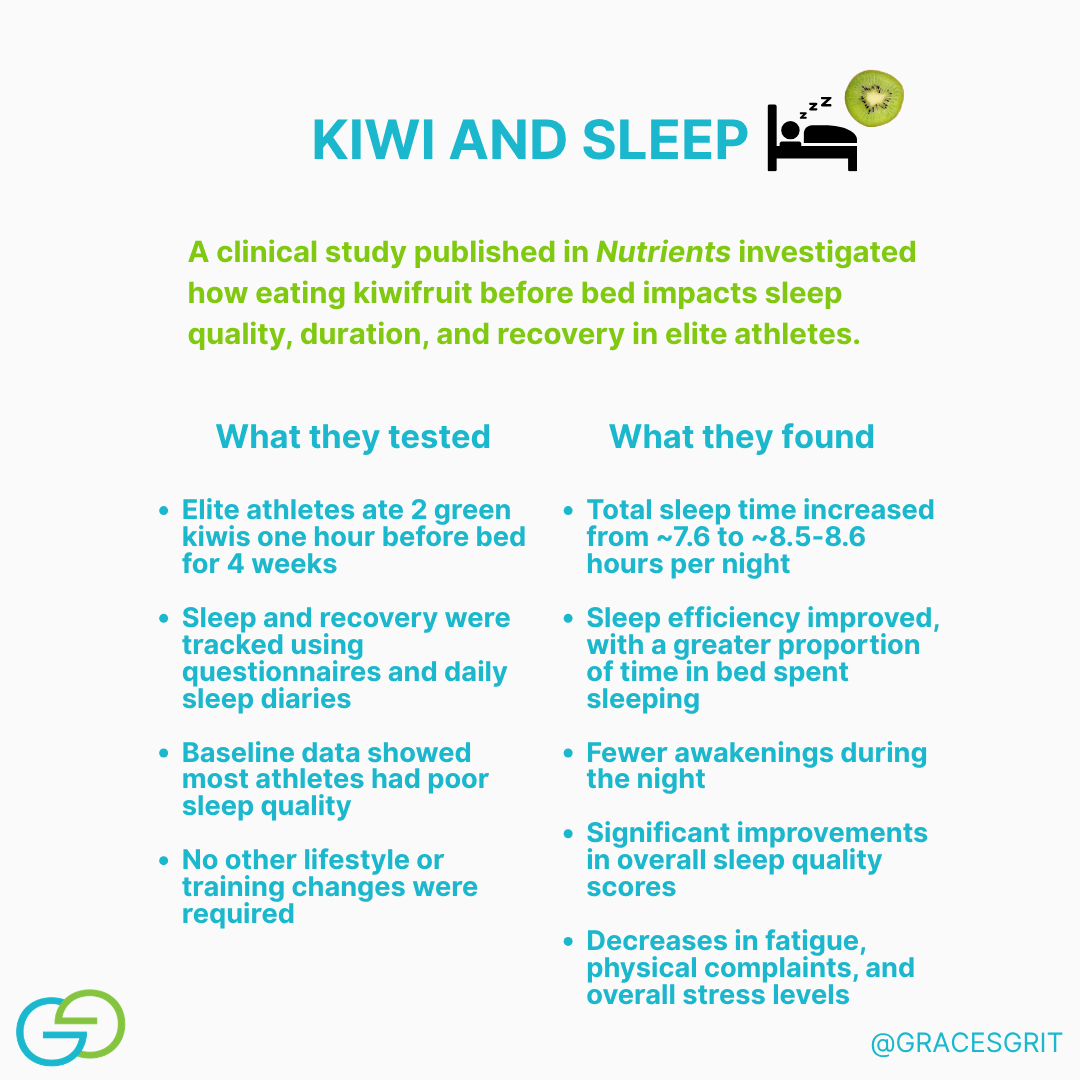
A clinical study published in Nutrients investigated how eating kiwifruit before bed impacts sleep quality, duration, and recovery in elite athletes.
Here’s what they did:
Athletes ate 2 green kiwis one hour before bed for 4 weeks. Sleep and recovery were tracked using questionnaires and daily sleep diaries. At baseline, most of the athletes already had poor sleep quality, and no other lifestyle or training changes were made.
Here’s what they found:
Total sleep time increased from about 7.6 hours to 8.5 to 8.6 hours per night. Sleep efficiency improved, meaning more time in bed was actually spent sleeping. Athletes also had fewer awakenings during the night and saw significant improvements in overall sleep quality.
On top of that, there were decreases in fatigue, physical complaints, and overall stress levels.
If you’re an athlete balancing training, school, work, or kids, better sleep is always a win.
Kiwi and Antioxidant Capacity
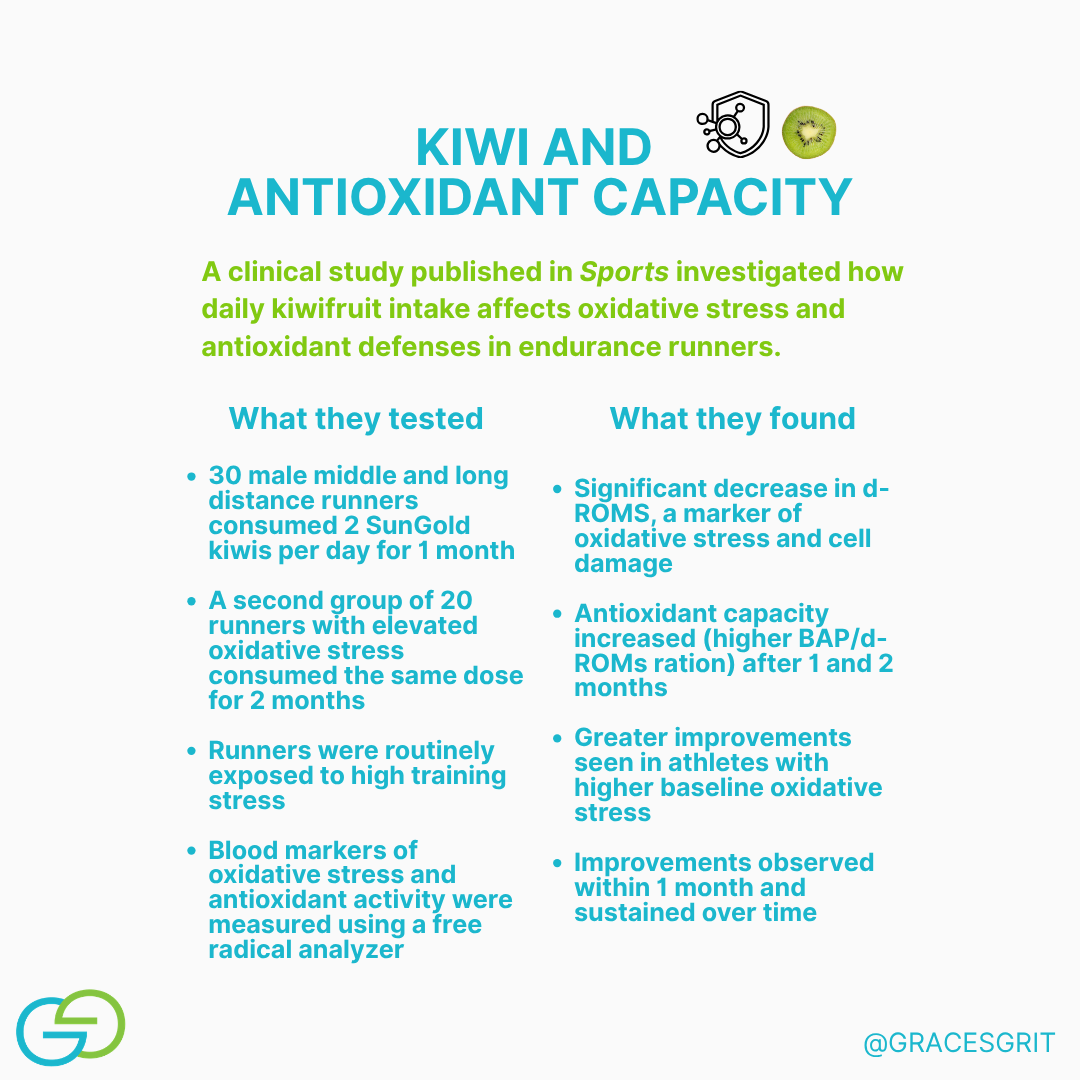
A clinical study published in Sports investigated how daily kiwifruit intake affects oxidative stress and antioxidant defenses in endurance runners.
Here’s what they did:
Thirty male middle- and long-distance runners consumed 2 SunGold kiwis per day for one month. Another group of 20 runners with higher oxidative stress followed the same protocol for two months. These athletes were consistently training at high levels, and researchers measured blood markers related to oxidative stress and antioxidant activity.
Here’s what they found:
There was a significant decrease in oxidative stress and cell damage. At the same time, antioxidant capacity increased after both one and two months. The biggest improvements were seen in athletes with higher baseline oxidative stress, and improvements were seen within 1 month and maintained over time.
For athletes training hard and consistently, this is another area where kiwi may play a supportive role.
Kiwi Recipes
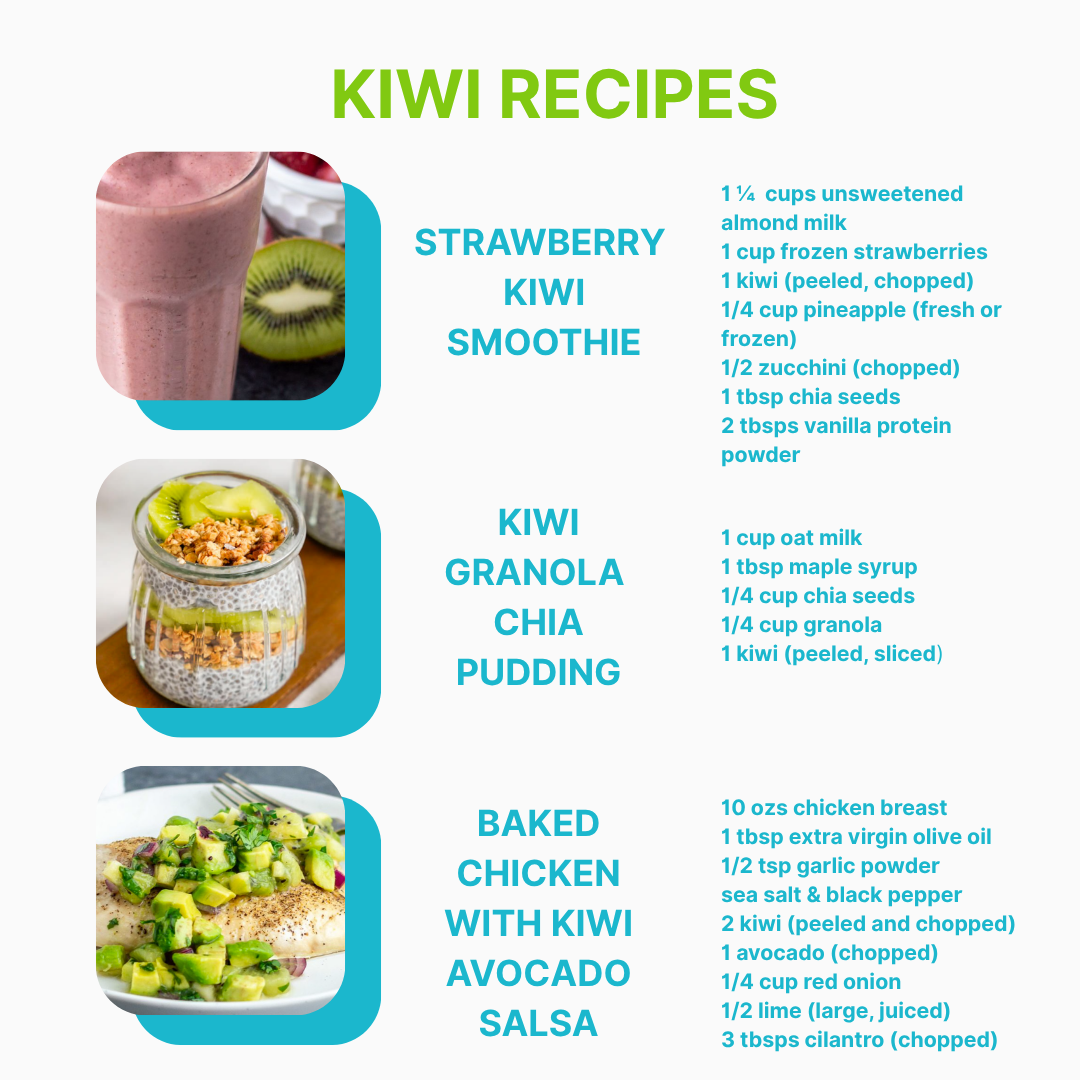
After hearing about this research, you might be thinking about giving kiwi a try or even trying it in a new way! Here are a few fun, easy recipes to get you started:
Strawberry Kiwi Smoothie
Blend together milk, frozen strawberries, kiwi, pineapple, zucchini, chia seeds, and vanilla protein powder
Kiwi Granola Chia Pudding
Mix milk, maple syrup, and chia seeds, then top with granola and sliced kiwi for something easy to prep ahead
Baked Chicken with Kiwi Avocado Salsa
Top baked chicken with a mix of kiwi, avocado, red onion, lime juice, and cilantro for a fresh, flavorful meal
The Bottom Line
Kiwi is a nutrient-dense fruit that may support digestion, sleep, and antioxidant capacity, with emerging research continuing to explore its benefits.
At the same time, it’s important to remember that we can’t rely on one single food to do everything. These benefits are best supported through a balanced, nutrient-dense diet, along with proper fueling, training, rest, and recovery.
If you’re looking for something simple to try, adding kiwi to your routine could be a great place to start.
If you want help building a fueling plan that fits your routine and supports your performance as a whole, book an intro call today with GracesGrit to learn more!
References:
Gearry R, Fukudo S, Barbara G, et al. Consumption of 2 Green Kiwifruits Daily Improves Constipation and Abdominal Comfort-Results of an International Multicenter Randomized Controlled Trial. Am J Gastroenterol. 2023;118(6):1058-1068. doi:10.14309/ajg.0000000000002124
Doherty R, Madigan S, Nevill A, Warrington G, Ellis JG. The Impact of Kiwifruit Consumption on the Sleep and Recovery of Elite Athletes. Nutrients. 2023;15(10):2274. Published 2023 May 11. doi:10.3390/nu15102274
Imai N, Kobayashi Y, Uenishi K. The Intake of Kiwifruits Improve the Potential Antioxidant Capacity in Male Middle- and Long-Distance Runners Routinely Exposed to Oxidative Stress in Japan. Sports (Basel). 2021;9(3):37. Published 2021 Mar 3. doi:10.3390/sports9030037
