

Winter Blues Or Low Vitamin D?
If your energy or mood has dipped this season, it may not just be winter’s shorter days. Surprisingly, low vitamin D levels can play a big role.
Vitamin D levels can drop significantly when daylight hours shrink and time spent outdoors decreases. Because Vitamin D plays a key role in mood regulation, immune function, and bone health, even a slight decline can leave you feeling not quite yourself and may contribute to a higher risk of bone injuries and decreased performance. Understanding this connection is the first step toward supporting your levels and feeling better throughout the winter season.
Fortunately, with a few simple habits, you can support your levels and feel brighter, stronger, and energized from the inside out.
What is Vitamin D and why do levels decrease in the winter months?
Vitamin D is a fat-soluble vitamin that acts like a hormone in the body. It supports bone strength, muscle function, and immune health. Because we rely heavily on sunlight to make it, levels often drop in the colder, darker months.
Athlete considerations: Athletes don’t always need more Vitamin D, but they should keep a closer eye on levels and intake. Low Vitamin D can hurt muscle strength, recovery, and raise injury risk, especially during winter training.
Contributing factors to decreased Vitamin D levels:
Less sunlight = less UVB exposure
Indoor training reduces synthesis
Latitudes >35° north/south need supplementation (For the U.S., this mostly applies to northern states)
Skin coverage and sunscreen block vitamin D production
Recognizing these risk factors is the first step toward maintaining adequate levels through mindful sun exposure, diet, and supplementation when necessary. The next section will explore the common signs of deficiency, how to identify, and strategies to support your vitamin D status.
Signs and Symptoms of Vitamin D Deficiency and How to Combat
Vitamin D deficiency can present in many ways, and symptoms often develop slowly, which makes them easy to attribute to stress, hard training, or even the “winter blues”. One of the most common signs is muscle weakness or unexplained soreness since vitamin D is required for muscle fiber contraction and protein synthesis. Low levels can also contribute to cramping, prolonged recovery, and greater perceived effort during workouts.
A more serious concern is bone health. Vitamin D helps the body absorb calcium and maintain strong bones, so chronic deficiency can lead to decreased bone density and a higher risk of fractures. Athletes may notice recurring shin pain, delayed healing, or stress fractures that don’t have a clear cause.
Vitamin D also plays a role in energy metabolism. Even a mild deficiency may leave you feeling unusually fatigued, sluggish, or “heavy,” especially during winter training. Because it supports immune regulation, low levels can result in more frequent colds, longer recovery times, or a general feeling of being run down.
Recent studies highlight its influence on mental health as well. Vitamin D receptors are found in areas of the brain that regulate mood and sleep, and low levels have been linked to increased anxiety, low mood, and trouble with concentration or sharpness. Poor sleep quality, difficulty waking, and daytime grogginess may also be related to insufficient Vitamin D.
Supplementation
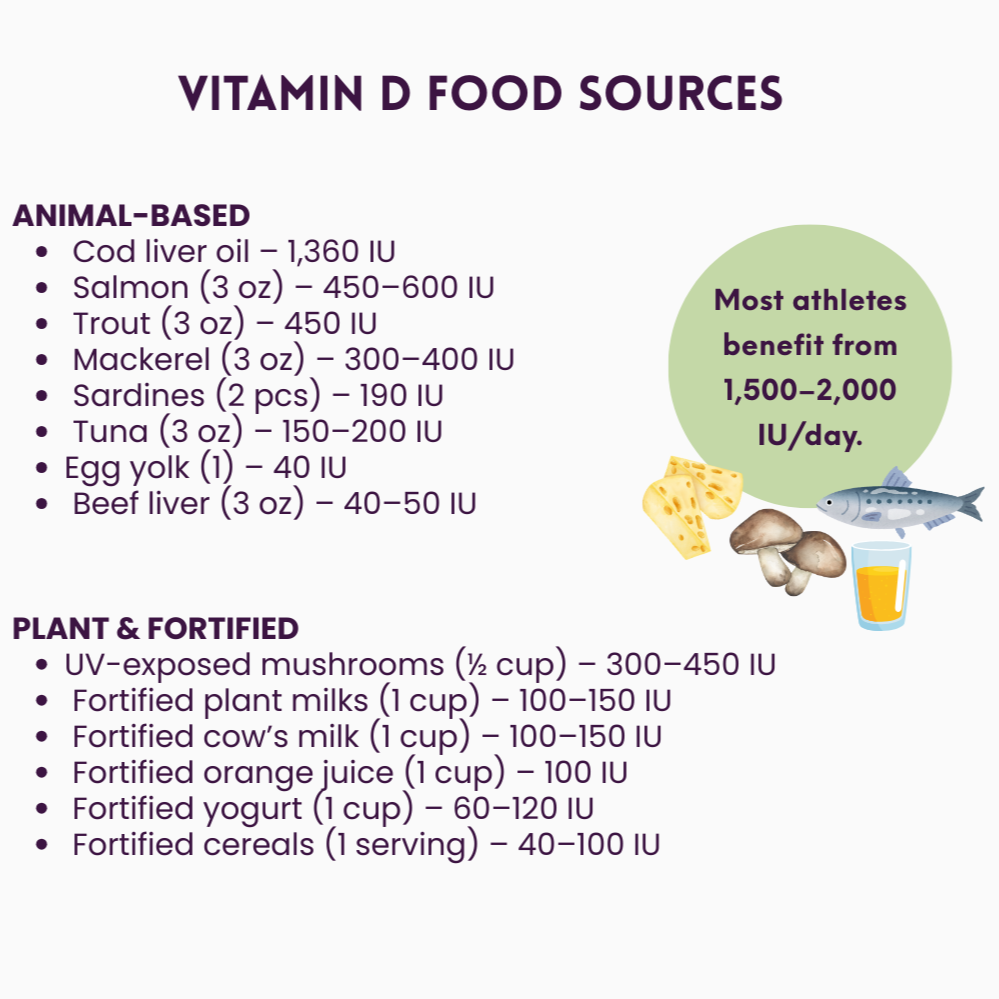
Even with a balanced diet, it can be challenging to get enough vitamin D in the winter months, especially at higher latitudes or for people who spend most of their time indoors. Vitamin D3, also known as cholecalciferol, is the preferred form for supplementation. Taking it with a meal that contains healthy fats such as avocado, nuts, olive oil, or fatty fish can improve absorption and help the body make the most of the supplement.
For most adults, a daily dose of 1,500 to 2,000 IU is sufficient to maintain optimal levels, while athletes may particularly benefit from staying toward the higher end of this range. Monitoring serum 25-hydroxyvitamin D levels can help ensure adequacy, with a standard reference range of 30 to 100 ng/mL, and an athlete-focused optimal range of 50 to 100 ng/mL.
Supplementation With Vitamin K2?
Vitamin D is sometimes recommended to be combined with Vitamin K2, which works together to direct calcium into the bones where it is needed and away from soft tissues such as arteries. This combination can support both bone strength and cardiovascular health. Consulting with a Dietitian or your PCP is recommended to determine the right dose for individual needs. Moderate supplementation combined with nutrient-rich foods and safe sun exposure, can help maintain optimal Vitamin D levels and support overall health throughout the winter months.
The Bottom Line:
As winter continues, many people experience a natural drop in Vitamin D that can influence energy, mood, immunity, and overall performance. Focusing on food sources, spending time outside when possible, and using supplements when necessary can help keep your Vitamin D levels in a healthy range. Athletes and active individuals may need closer monitoring to support muscle function and reduce injury risk during the colder months. With a few consistent habits, you can maintain steadier energy and feel more like yourself throughout the season.
If you are unsure about your Vitamin D status or need personalized nutrition guidance, schedule an initial consultation today to get started!
Learn more about supporting Vitamin D levels on our instagram!
References:
Kazemian, E., Pourali, A., Sedaghat, F., Karimi, M., Basirat, V., Sajadi Hezaveh, Z., Davoodi, S. H., & Holick, M. F. (2023). Effect of supplemental vitamin D₃ on bone mineral density: A systematic review and meta‑analysis. Nutrition Reviews, 81(5), 511–530.
Larson‑Meyer, D. E. (2015, July). The importance of vitamin D for athletes. Sports Science Exchange (No. 148). Gatorade Sports Science Institute. https://www.gssiweb.org/sports-science-exchange/article/sse-148-the-importance-of-vitamin-d-for-athletes Gatorade Sports Science Institute
Rusińska, A., Dobrzyńska, M., Płudowski, P., Rusiński, P., Walicka, M., & Abramski, P. (2023). Guidelines for preventing and treating vitamin D deficiency: A 2023 update in Poland. Nutrients, 15(3), 695. https://doi.org/10.3390/nu15030695
