

Whether you’re a distance runner or you participate in a high impact sport, keeping your bones healthy is essential for staying strong, preventing injuries, and long term bone health.
Although bones are strong, they need adequate nutrition and recovery to keep up with the demands of exercise. When the stress placed on bones exceeds their ability to repair themselves, a bone stress injury (BSI) can develop.
What is a Bone Stress Injury?
A bone stress injury occurs when repetitive loading exceeds the bones ability to repair itself. Think of it as a balance between loading and rebuilding:
Loading: Repetitive activities like running and jumping place stress on bones, creating tiny amounts of microdamage.
Rebuilding: The body repairs this damage by removing old bone and replacing it with new bone.
When loading exceeds rebuilding: Microdamage accumulates faster than the body can repair it, potentially leading to a bone stress injury.
Bone stress injuries range in severity, from early stress reactions to more advanced stress fractures.
How Does Underfueling Affect Bone Health?
One important risk factor for bone stress injuries is low energy availability (LEA). This occurs when an athlete does not consume enough energy to support exercise in addition to normal bodily functions and daily activities. Prolonged or severe low energy availability can contribute to Relative Energy Deficiency in Sport (REDs). REDs can affect several areas of health and performance, including cardiovascular, gastrointestinal, psychological, metabolic, reproductive, and bone health.
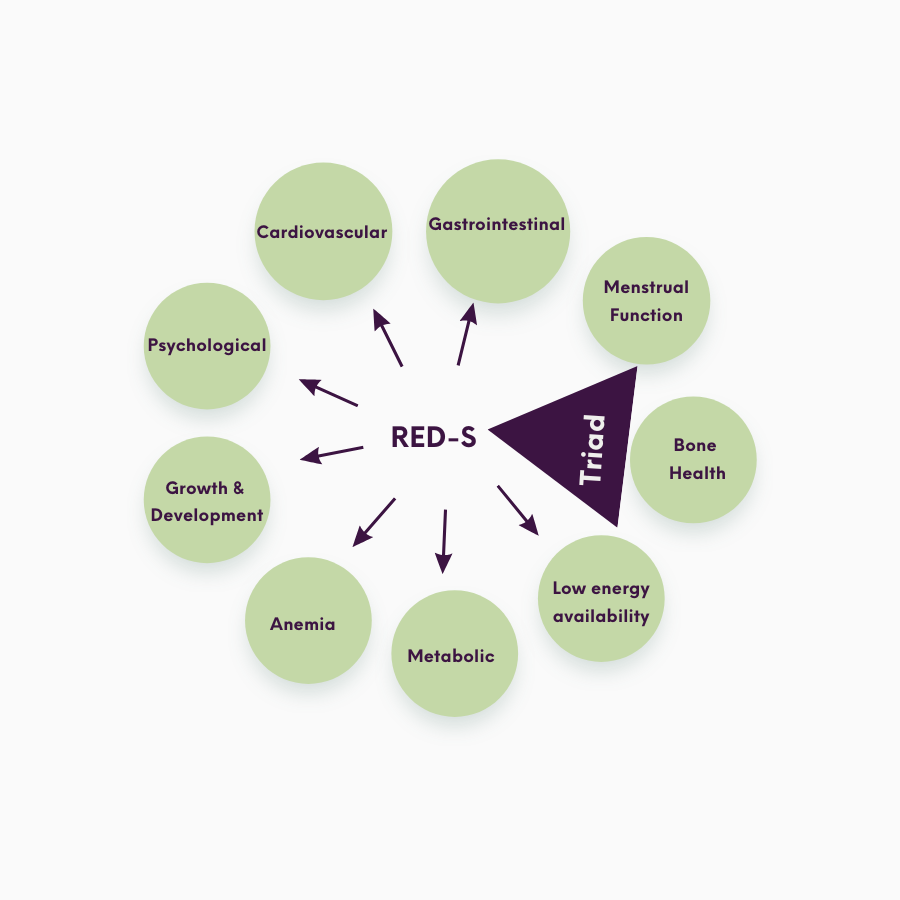
The Female Athlete Triad was the foundational framework for understanding the relationship between underfueling and bone health. It includes three interconnected components:
Low energy availability: Not consuming enough energy to support activity and normal bodily functions.
Menstrual dysfunction: Irregular or missed periods.
Impaired bone health: Reduced bone mineral density and increased risk of bone stress injuries.
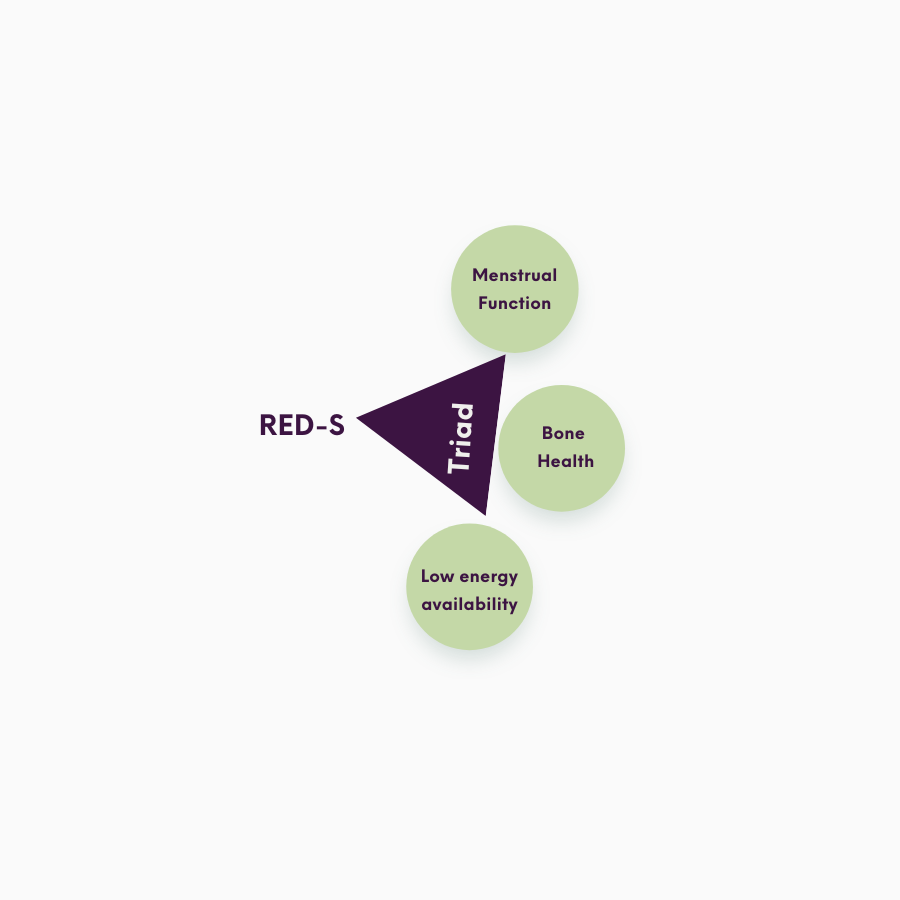
It is possible to experience one or more components of the Triad. REDs expands beyond these three components and recognizes that low energy availability can affect multiple body systems.
The Connection Between Menstrual Health and Bone Health
Missing a period can be a warning sign that your body is not receiving enough energy. Over time, chronic underfueling can disrupt hormones such as estrogen, testosterone, and luteinizing hormone.
Estrogen plays an important role in maintaining bone health. When estrogen levels are reduced, bone formation and maintenance can be negatively affected. Prolonged hormone disruption can contribute to lower bone mineral density and increased risk of bone stress injuries.
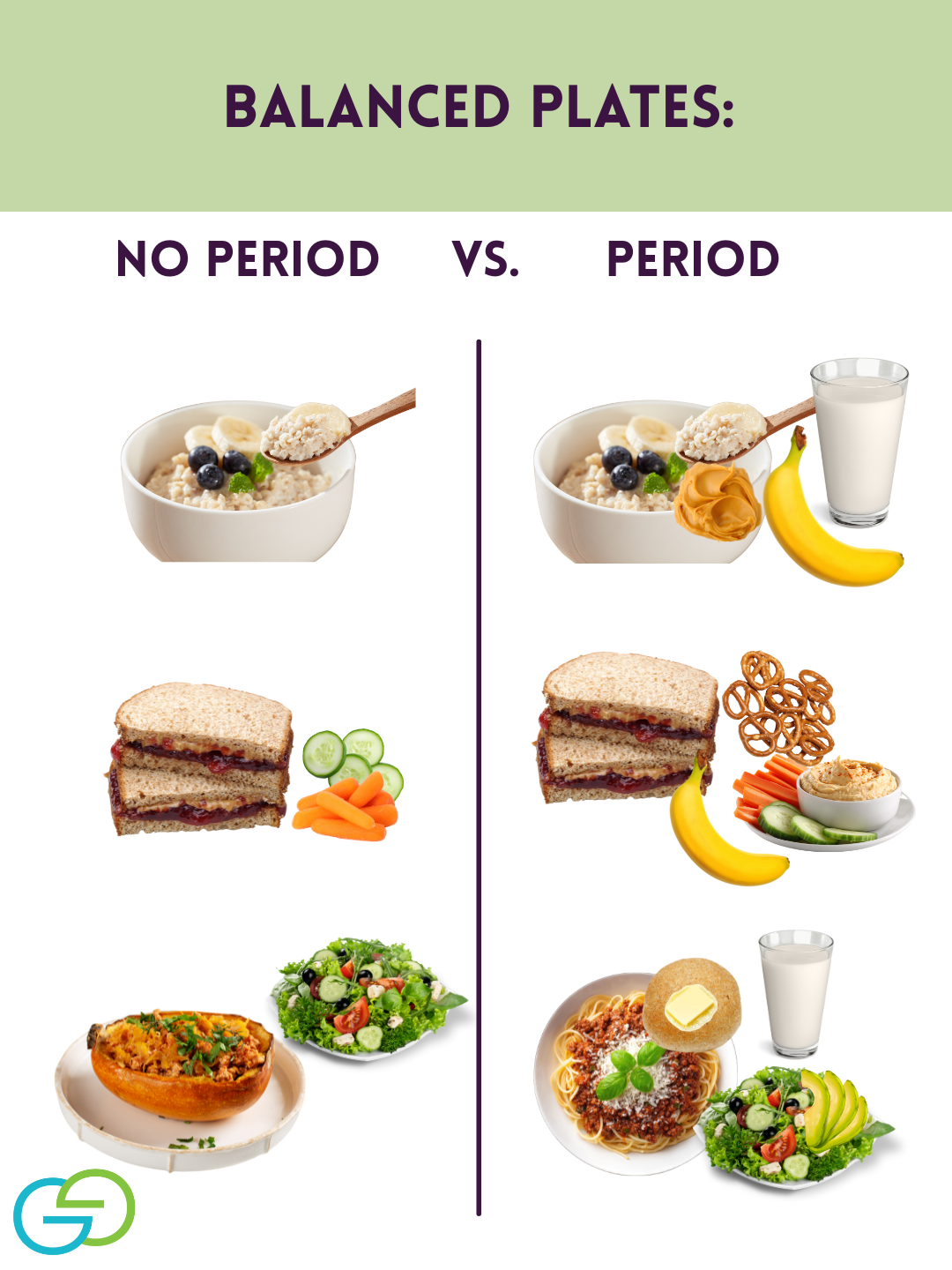
Missing a period is not a normal consequence of training! It is important to recognize menstrual changes and discuss them with a healthcare professional.
Plates to Support Period Recovery:
Understanding Bone Mineral Density
What is a DEXA scan?
A DEXA scan (dual energy X-ray absorptiometry) uses low dose X-rays to measure bone mineral density (BMD). These results may be used to evaluate bone health and identify potential risk factors for injury. Two measurements commonly seen include:
T-score: Compares bone mineral density with a healthy young adult reference. A T-score of -1 or greater is generally considered normal.
Z-score: Compares bone mineral density with people of similar age and gender. A Z-score of -2.0 or lower is considered below the expected range for age.
A lower BMD is just one factor considered when evaluating for bone stress injury risk.
What are Important Nutrients for Strong Bones?
Fueling consistently and meeting your body’s energy needs are important for supporting bone health. Two nutrients that have especially crucial roles are Calcium and Vitamin D.
Calcium:
Helps build and maintain bone structure
Supports bone mineralization
Recommended daily intake of calcium: 1000-1200mg/day
Food sources include dairy products, kale, tofu, and white beans

Vitamin D:
Helps the body absorb calcium
Supports normal bone mineralization
If you are an athlete, aim to have a vitamin D lab value of greater than 50ng/mL.
Food sources include fatty fish, egg yolks, mushrooms, fortified cereals, and fortified orange juice

Other important nutrition habits include eating enough to support both training and daily activities. It is important to consume adequate carbohydrates and protein to fuel exercise, support your recovery, and promote muscle repair. Eating a variety of nutrient dense foods can also help ensure adequate intake of vitamins and minerals. Supplements should be based on dietary intake and individualized needs. Talk with your RDN if you have specific questions about supplementation.
Who is at Risk for a Bone Stress Injury?
Bone stress injuries are multifactorial, meaning more than one factor can contribute to injury risk. Training related factors such as rapid increases in training volume or intensity and inadequate recovery between sessions, can place additional stress on the bones. Nutrition and hormonal factors also play an important role. Low energy availability, a history of disordered eating, menstrual dysfunction, and low bone mineral density can all negatively affect bone health and increase injury risk. Athletes who have experienced a previous bone stress injury are also at greater risk of developing another.
The relationship between relative energy deficiency in sport (REDs) and bone health is supported by recent research. A 2025 study of 82 elite athletes found that stress fractures were more common among athletes diagnosed with REDs compared to those without REDs (70% vs. 25%). Research also identified reduced bone formation, increase bone resorption, and lower bone mineral density among athletes with REDs.
Together these findings highlight why adequate fueling, appropriate recovery, menstrual health, and a history of previous injuries should all be considered when evaluating an athletes risk for a bone stress injury.
The Takeaway
Your body needs energy for more than just exercise! Bone health depends on a balance between training load, nutrition, and recovery. Consistent fueling, adequate calcium and vitamin D, appropriate training progression, and enough recovery all help support healthy bones.
Remember, do not wait until an injury or ache occurs to prioritize your bone health. Fueling your body is one part of being a strong and healthy athlete!
If you want help building a fueling plan that fits your routine and supports your performance as a whole, book an intro call today with GracesGrit to learn more!
References
George ERM, Sheerin KR, Reid D. Criteria and Guidelines for Returning to Running Following a Tibial Bone Stress Injury: A Scoping Review. Sports Med. 2024;54(9):2247-2265. doi:10.1007/s40279-024-02051-y
Williams NI, De Souza MJ, Misra M, et al. 2025 Update to the Female Athlete Triad Coalition Consensus Statement Part 2: Clinical Guidelines for Screening, Diagnosis, Treatment, and Return to Play for Adolescents and Adults. Sports Med. 2026;56(2):375-427. doi:10.1007/s40279-025-02332-0
von Brackel FN, Munzinger R, Bartosik M, et al. Impact of Relative Energy Deficiency in Sport (REDs) on Bone Health in Elite Athletes: A Retrospective Analysis. J Cachexia Sarcopenia Muscle. 2025;16(5):e70082. doi:10.1002/jcsm.70082
Rauh MJ, Barrack M, Nichols JF. Associations between the female athlete triad and injury among high school runners. Int J Sports Phys Ther. 2014;9(7):948-958.
