

Have you ever noticed changes in your hunger, energy levels, or cravings throughout the month?
These changes may be related in part to the hormonal fluctuations that occur during the menstrual cycle.
With cycle syncing becoming increasingly popular on social media, you may have seen recommendations to eat specific foods during each phase to balance your hormones, improve performance, or reduce symptoms. But what does the research actually tell us?
The good news is that you don’t need a completely different nutrition plan for every phase of your cycle. Understanding your menstrual cycle can help you recognize patterns in your appetite, energy, and symptoms so you can adjust your nutrition to support your individual needs. Let’s break down the science behind the menstrual cycle and nutrition.
Understanding Your Cycle
The menstrual cycle is a process regulated by reproductive hormones, including estrogen and progesterone. These hormones help to regulate ovulation and changes to the uterine lining. These hormones can also interact with other processes like appetite and metabolism.
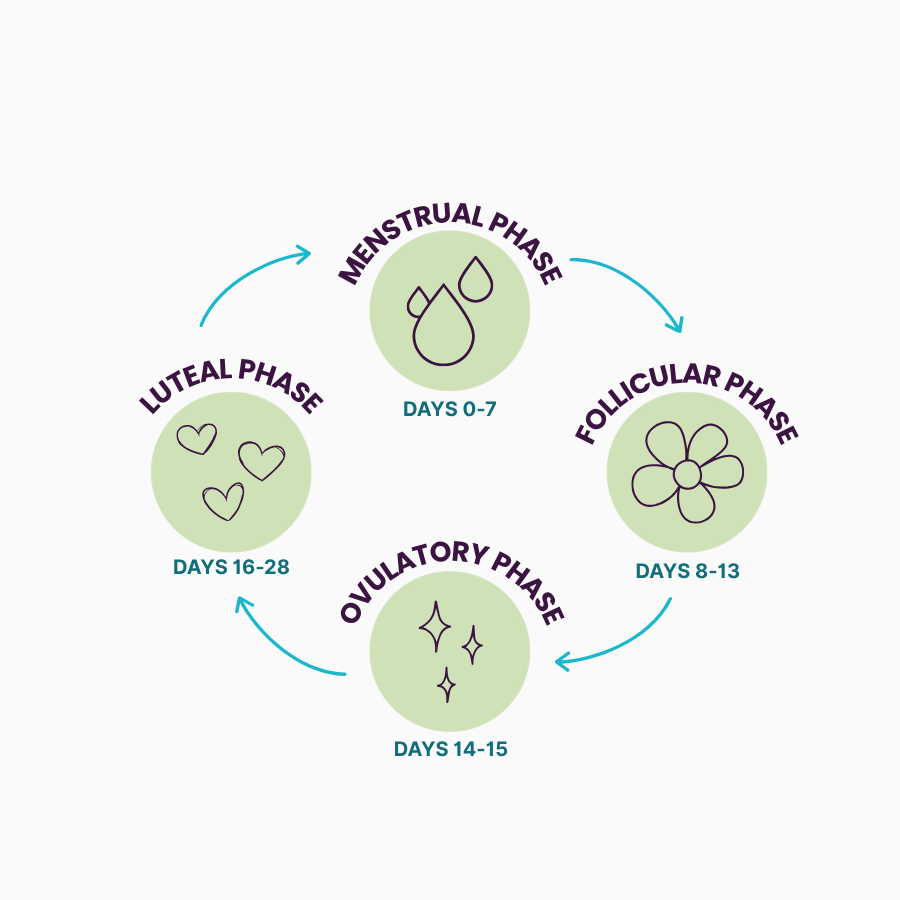
A typical menstrual cycle lasts approximately 21-35 days, although individual cycles can vary. Day 1 is the first day of menstrual bleeding, and the cycle ends the day before the next period begins. The cycle is commonly described in four phases.
Menstrual Phase: The uterine lining sheds, resulting in menstrual bleeding. Estrogen and progesterone are low.
Follicular Phase: Follicle Stimulating Hormone (FSH) supports follicular development and estrogen rises.
Ovulatory Phase: A surge in Luteinizing Hormone (LH) triggers the release of an egg. Estrogen typically peaks shortly before ovulation.
Luteal Phase: The Corpus Luteum produces progesterone, along with estrogen, to support the uterine lining. If pregnancy does not occur, these hormone levels decline before the next period.
How can Hormones Influence Nutrition?
Estrogen and progesterone do more than regulate reproduction. They may also influence appetite, energy intake, metabolism, and body temperature.
Research suggests that estrogen may suppress appetite, while progesterone may contribute to increase appetite in certain hormonal environments. These effects help explain why some people notice greater hunger or cravings before their period. However, hormonal fluctuations do not affect everyone in the same way. A narrative review of research on menstrual cycle energy intake found that many studies reported higher average energy intake during the luteal phase than during the follicular phase, while other studies found no significance differences. Variations in study methods and individual responses make it difficult to establish one universal pattern (Rogan & Black, 2023).
So what does this mean for your nutrition? Rather than following rigid rules, use the phases of your cycle as an opportunity to understand your own patterns and respond to your body’s needs.
Nutrition Through Each Phase
1. Menstrual Phase
During menstruation, estrogen and progesterone are relatively low. Some people experience cramping, fatigue, changes in appetite, or reduced motivation, while others notice little change.
Nutrition Focus:
Maintain regular meals and snacks, even when appetite or energy fluctuates.
Include iron rich foods to support iron intake, particularly if you experience heavy menstrual bleeding.
Pair plant based iron sources with Vitamin C rich foods to improve iron absorption.
Continue consuming adequate carbohydrates, protein, and fats to support daily activities and recovery.
2. Follicular Phase
Following the start of menstruation, follicles develop and estrogen generally rises as ovulation approaches. You may notice changes in energy, mood, or appetite during this time, although these experiences are not universal.
Nutrition Focus:
Eat balanced meals containing carbohydrates, protein, and healthy fats.
Include carbohydrates to support training and replenish muscle glycogen.
Distribute protein throughout the day to support muscle repair and recovery.
Adjust meal and snack portions according to your activity level and hunger.
3. Ovulatory Phase
Ovulation occurs when Luteinizing Hormone (LH) surge triggers the release of an egg. Estrogen is typically high immediately before ovulation and decreases afterward, while progesterone begins to rise during the luteal phase.
Nutrition Focus:
Continue eating regular, balanced meals and snacks.
Consume enough carbohydrates to support training demands.
Include protein throughout the day for muscle maintenance and recovery.
Maintain hydration based on your activity, environment, and individual fluid needs.
4. Luteal Phase
After ovulation, progesterone rises, and estrogen also fluctuates during the luteal phase. Some people notice increased hunger, cravings, bloating, or other premenstrual symptoms as their next period approaches.
Nutrition Focus:
Honor increased hunger by adding a snack or increasing meal portions when needed.
Combine carbohydrates with protein and fats to create satisfying snacks.
Continue fueling around exercise rather than restricting food to follow a phase specific plan.
Stay hydrated and eat a variety of nutrient rich foods.
What Does the Research Say About the Luteal Phase?
A 2023 narrative review found that many studies reported higher energy intake during the luteal phase, although findings were not consistent across all studies (Rogan & Black, 2023). Research involving athletes also highlights the importance of individual differences. 122 female athletes were studied and no statistically significant differences in energy or nutrient intake across the follicular, early luteal, and late luteal phases were found (Miyamoto & Shibuya, 2023). These findings are not necessarily contradictory, research populations, individual responses, and study methods differ. The important takeaway is that increased hunger during the luteal phase can be normal, and it is okay to eat more when your body needs additional energy.
You do not need to suppress cravings or avoid particular foods to support your hormones. A flexible, balanced eating pattern can include both nutrient rich foods and foods you enjoy.
What Does the Research Say About Cycle Syncing?
Cycle syncing generally refers to adjusting nutrition, exercise, or lifestyle habits according to the menstrual cycle. While understanding your cycle may help you recognize changes in appetite, energy, and symptoms, claims that everyone needs specific foods during each phase goes beyond what the current evidence can establish.
Here are three important findings:
Appetite may change, but not for everyone
A narrative review found that energy intake was often higher during the luteal phase than the follicular phase, although findings varied across studies. Hormonal changes are only one part of a complex relationship involving appetite, behavior, physical activity, and other individual factors (Rogan & Black, 2023).
Athletes may not follow the same intake patterns as the general population
A study published in 2023 examined dietary records from 122 female athletes, ages 15-24, including track and field and rowing athletes. No statistically significant differences in energy, carbohydrate, protein, fat, calcium, iron, or fiber intake across the three phases studied was found (Miyamoto & Shibuya, 2023).
Phase specific performance recommendations remain uncertain
A review was published examining nutrition based interventions and athletic performance across menstrual cycle phases. Some hydration, micronutrient, and dietary interventions showed potential benefits, but many of the studies assessed interventions only during one phase. This limits our ability to make strong recommendations about the best nutrition strategy for every phase. The evidence supports individualized nutrition rather than a rigid plan based solely on cycle timing. (Helm et al, 2021).
Practical Ways to Fuel Throughout Your Cycle
Instead of creating four entirely different meal plans, start with consistent fueling habits and make adjustments based on your needs.
Here are some meal ideas to support your cycle:
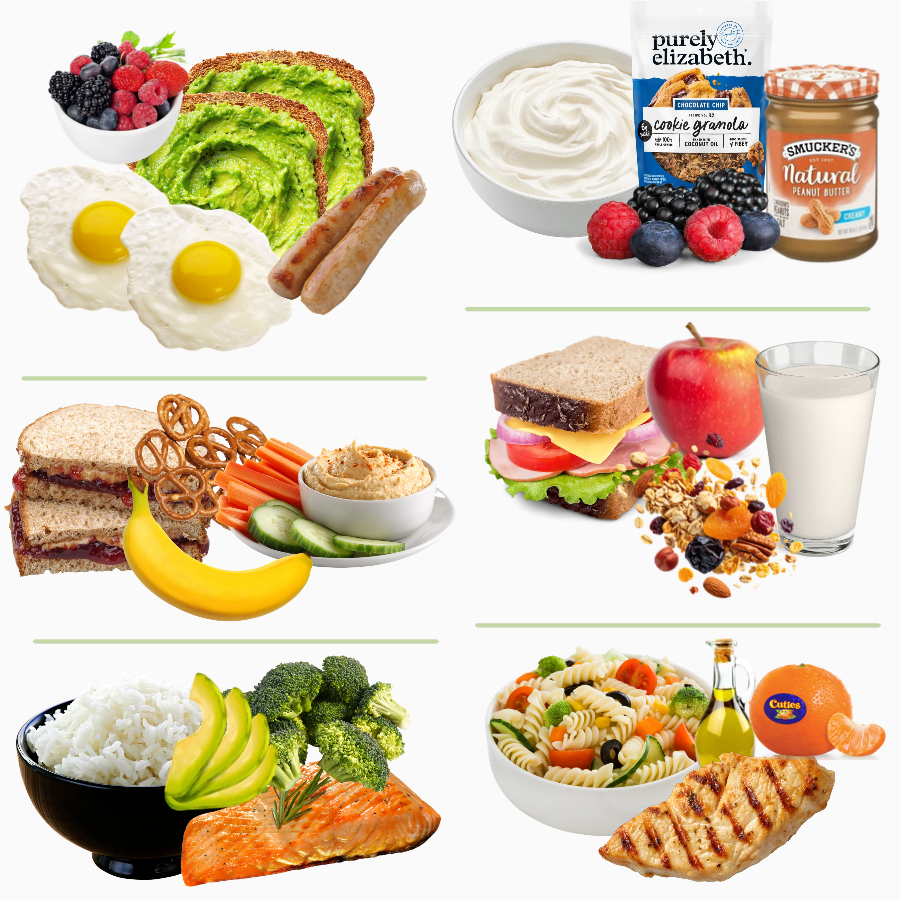
These plates provide a variety of carbohydrates, protein, fats, vitamins, and minerals to help support overall nutrition. Adjust portions and add snacks according to your hunger, training/exercise, and energy requirements. For athletes, consistently meeting energy needs is especially important. Chronically underfueling can affect menstrual function, bone health, performance, and recovery. Missing or irregular periods should not be dismissed as a normal consequence of training and could be a sign your body is experiencing Amenorrhea.
What is Amenorrhea?
Amenorrhea is the absence of menstrual periods.
Four important terms to know:
Primary Amenorrhea: No first period by the age of 15.
Secondary Amenorrhea: No period for more than 3 consecutive months.
Hypothalamic Amenorrhea: Periods stop due to factors such as underfueling, excessive exercise, or stress. Often linked to REDs (Relative Energy Deficiency in Sport).
Oligomenorrhea: Infrequent periods - cycles lasting longer than 35 days or less than 6-9 periods in a year.
The Bottom Line
Your menstrual cycle is personal!
Hormonal fluctuations can influence appetite, energy, and other psychological processes, but the effects vary from person to person, and research does not establish a specific diet for every phase. Rather than trying to eat perfectly for each phase, focus on the habits that matter throughout the month.
Fuel consistently
Honor hunger
Choose variety
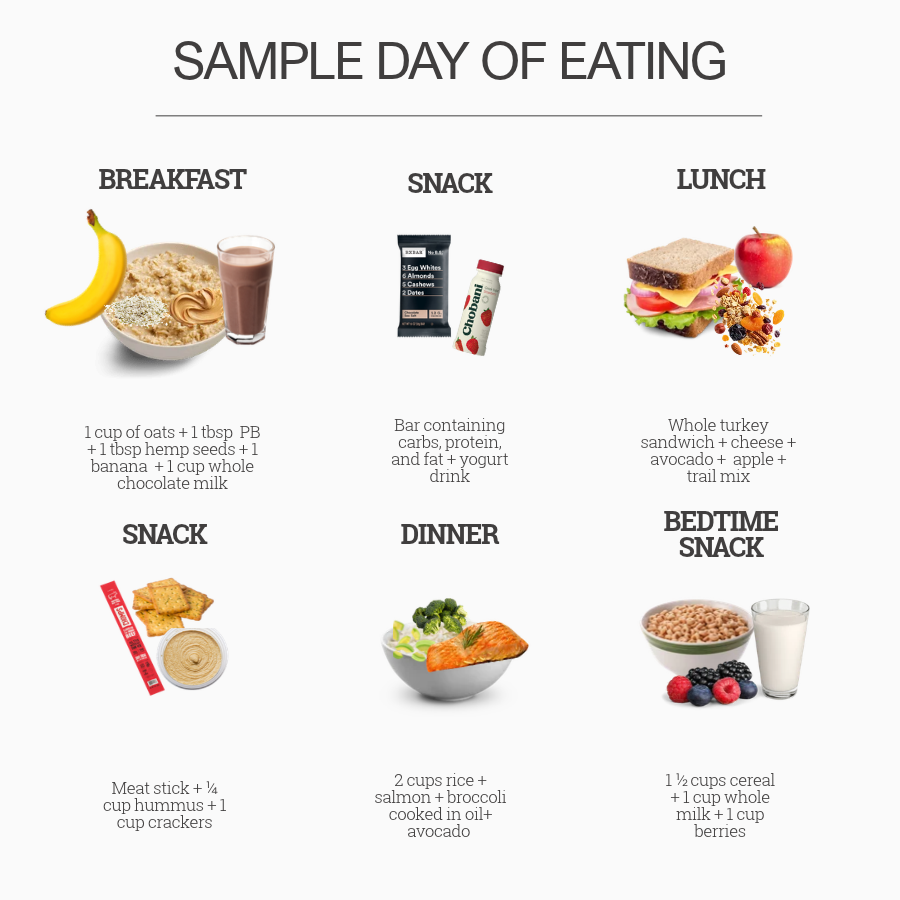
You don’t need to eat differently just because your cycle changes. You need to give your body the nutrition it needs, whenever it needs it.
If you want help building a fueling plan that fits your routine and supports your performance as a whole, book an intro call today with GracesGrit to learn more!
References
Rogan MM, Black KE. Dietary energy intake across the menstrual cycle: a narrative review. Nutr Rev. 2023;81(7):869-886. doi:10.1093/nutrit/nuac094
Miyamoto M, Shibuya K. Exploring the relationship between nutritional intake and menstrual cycle in elite female athletes. PeerJ. 2023;11:e16108. Published 2023 Sep 25. doi:10.7717/peerj.16108
Helm MM, McGinnis GR, Basu A. Impact of Nutrition-Based Interventions on Athletic Performance during Menstrual Cycle Phases: A Review. Int J Environ Res Public Health. 2021;18(12):6294. Published 2021 Jun 10. doi:10.3390/ijerph18126294
