

Training on Empty: The Real Effects of Fasted Workouts
It’s 6am, you’re in the middle of a workout, you feel dizzy, low on energy and are not performing well. The last time you ate was last night at 7pm when you had dinner. It’s now been 11 hours since your last meal and your body is feeling the lack of fuel. To the early-morning athletes and those with busy schedules, does this sound familiar?
This is a common habit among early morning trainers, oftentimes due to busy schedules, appetite, or the thought that it will bring fat loss. Here’s what you should know before you start your next workout without fuel.
Why We Need Carbohydrates
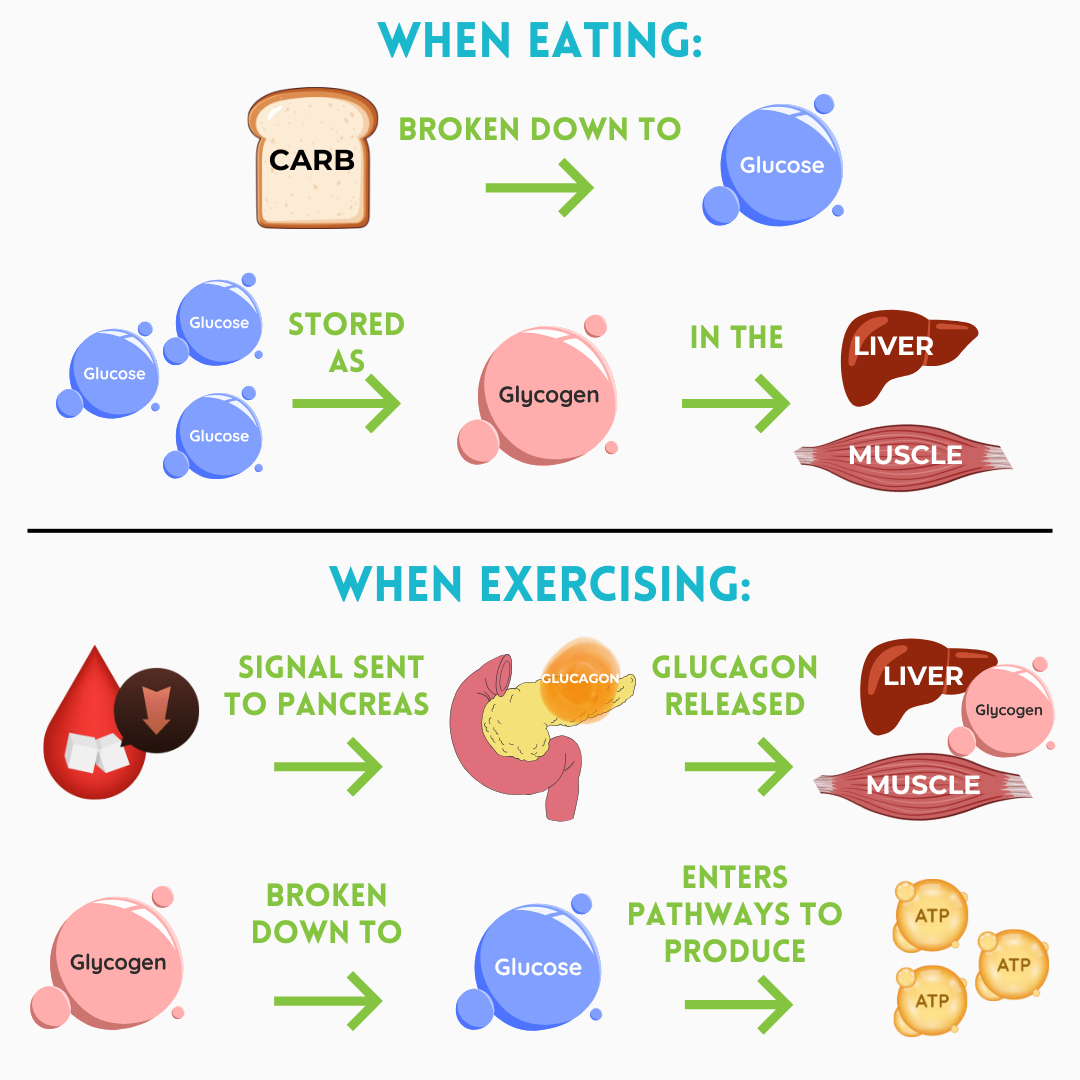
Energy is crucial for the body to function and especially important for the brain which demands the most energy. Carbohydrates are broken down into glucose, the body’s preferred energy source. Glucose is then stored as glycogen in the liver and muscles. During exercise, muscles use glucose, causing blood glucose levels to drop. The pancreas and hypothalamus detect low blood glucose, triggering a hormonal response. It releases glucagon to signal glycogen to break down in a process called glycogenolysis. Glycogen breakdown in muscle produces ATP for work, while breakdown in the liver raises blood glucose. As exercise continues, glycogen stores become progressively depleted and need to be replenished to support recovery. When beginning a workout fasted, carbohydrates are unavailable for glucose production, so glycogen stores are depleted early. Signs of depleted glycogen stores and low blood glucose levels include lightheadedness, dizziness, and fainting. When energy availability is low, the body prioritizes glucose for essential organs like the brain and reduces energy supply for other functions. Starting a workout with glycogen stores already depleted is a limiting factor for performance and also impacts the body's stress response and metabolism.
The Impact of Fasted Workouts on the Body
When workouts begin without adequate carbohydrate availability, the body doesn’t simply “push through”. Instead, it signals a cascade of hormonal and metabolic responses. The body initiates a stress response, elevating cortisol and impacting metabolism. A lack of glucose and glycogen signals the body to find an alternative fuel source, so muscle tissue may be broken down to provide energy. Then fatigue sets in, impacting form and potentially decreasing load tolerance, increasing the risk of injury. Underfueling doesn't just affect your energy during a workout, it can impact how your body adapts, repairs, and performs long-term. Let's dive deeper into these effects and how your body reacts to underfueling during exercise.
Disruption to Hormones
The body strives to maintain a homeostatic state which is impacted by energy balance. When energy intake is insufficient, the body shifts toward conservation. Adding exercise on top of an energy deficit increases physiological stress, resulting in elevated cortisol secretion. While elevated cortisol is adaptive short-term, long-term elevation has a range of effects.It impacts metabolism, catabolism of muscle and bone, and immune function. Over time, fasted exercise can reduce the body’s ability to adapt to training.
In females, disrupted energy and hormonal balances can further impact the menstrual cycle. When energy availability is low, the body prioritizes essential systems for survival and may suppress reproductive functions, leading to menstrual irregularities or the loss of a menstrual cycle. Subtle irregularities and symptoms can occur before cycle loss. Fueling before exercise and adequately throughout the day helps maintain hormonal balance, support physiological function, and maintain overall performance.
Increased Muscle Breakdown
An energy deficit can lead to an increased secretion of cortisol, sending a message to the body that impacts metabolism. To continue exercising, the body needs energy and will use what is available. Vital organs need to remain functioning, and energy is required for that. If glucose or glycogen is not available, gluconeogenesis will begin. This process creates glucose from non-carbohydrate sources to use for energy. The body’s amino acids (protein) and glycerol (fat) are used in an attempt to maintain energy levels and blood glucose levels. Using amino acids for glucose comes at a cost. It is counterproductive for the goals of strength, power, and adaptation.
Decreased Performance and Increased Risk of Injury
The body requires energy to perform. If underfueled, the body works to make energy from substrates like amino acids and glycerol when its preferred source is carbohydrates. The body is sending a signal when you feel dizzy and have low energy. Limited fuel means limited energy, impacting effort. This can lead to early fatigue and reduced power output. It can compromise technique, alter movement, and reduce load tolerance.
How Fasting Impacts LEA and RED-S
Fasted workouts increase the risk of low energy availability (LEA) and relative energy deficiency in sport (RED-S). LEA occurs when energy expenditure exceeds caloric intake. This deficit negatively impacts athletic performance because the body does not have adequate fuel. This can happen unintentionally, especially with morning training. Fasted workouts are often one piece to a bigger picture. Research found athletes with LEA had decreased training response, endurance performance, power, coordination, and concentration. A severe energy deficit can lead to RED-S. Fasted workouts layered with high training volume, underfueling, and busy schedules increase the risk of RED-S. This can cause alterations to metabolism, menstrual function, immune function, bone health, protein synthesis, and cardiovascular function. Correcting LEA can prevent RED-S from developing. Start by fueling properly before and after workouts to support energy needs and performance.
Carbohydrate Choices for Success
Carbohydrates should be prioritized before training, especially for high-intensity or longer sessions. Consuming 15–30 g of carbohydrates within ~30 minutes before exercise provides quick, available energy that can be used immediately. It helps prevent early fatigue, dizziness, and performance decline.
For early-morning athletes, liquid or semi-solid options may be better tolerated than solid meals. Tolerance is individual, so experimenting with different forms and amounts is key.
If you’re not used to eating before workouts, you may not feel hungry at first - this is common. Hunger cues often improve once the body adapts to consistent fueling. Even small amounts of carbohydrates still support performance and recovery.
Simple Pre-Workout Carb Options (15-30g)
These are easy, portable, and low in protein and fat - ideal for before a workout. Aim for 15-30g of carbohydrates.
GoGo Squeeze - 15g
Mott’s Applesauce cup - 25g
Bobo’s Stuff’d Oat Bites - 25g
Nature’s Bakery Fig Bar - 38g
That's It Bar Fruit Bar- 22g
Honey Stinger Waffle - 21g
Made Good Granola Bar - 17g
Medium Banana - 27g
Toast (15-22g) + 1 tbsp honey (17g)

Sample Timelines for Workouts
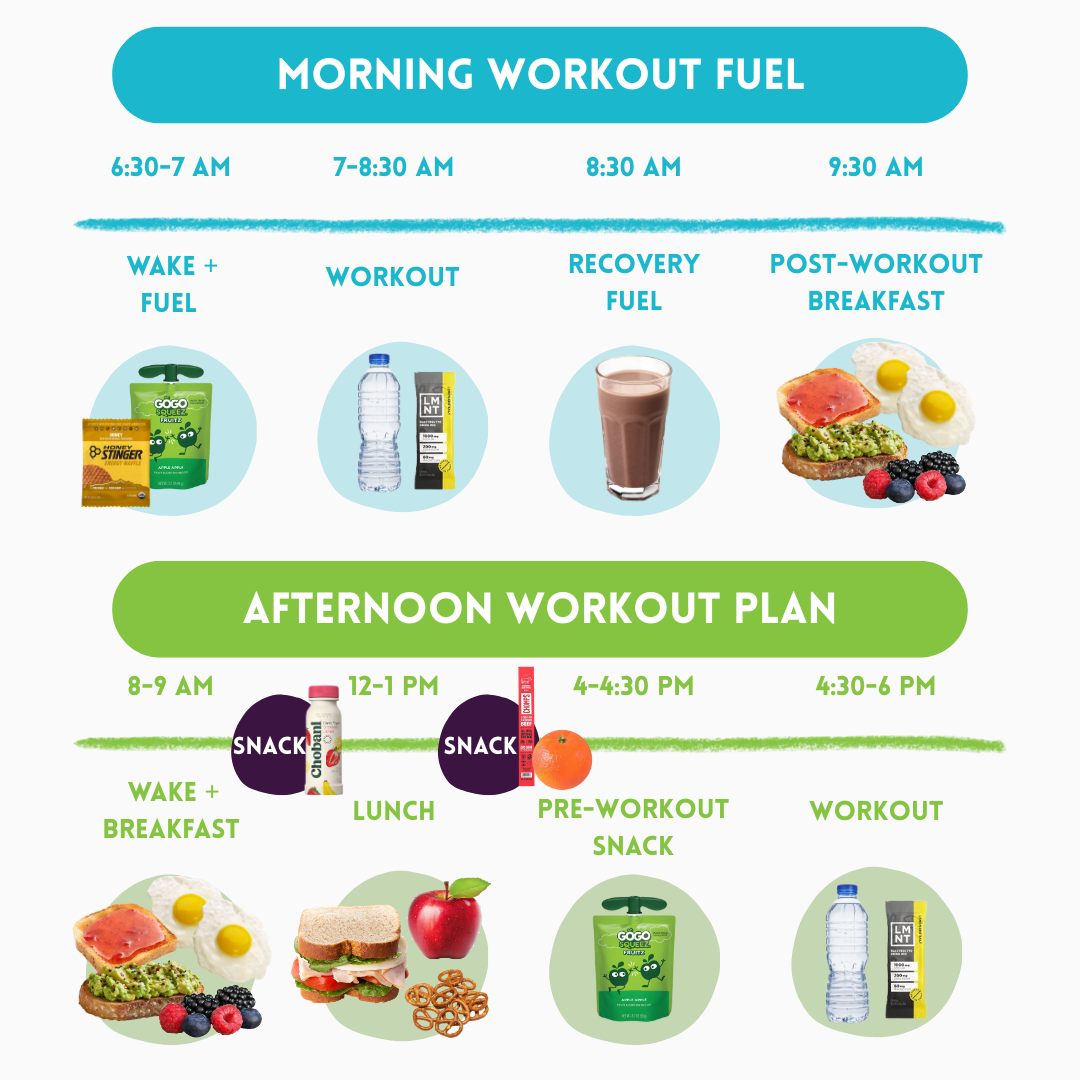
Tip: eat every 3-4 hours, have a snack 1.5-2.5 hours after a full meal, and fuel with a pre-workout carbohydrate to support performance
The Bottom line:
Fuel your body before, during, and after exercise. To perform well and promote hormone health and muscle growth, the body needs to have energy. If you have developed a habit of skipping fuel before workouts, start experimenting with carbohydrate options to find what works best for you. Remember fueling regularly is the goal, not perfection. Athletes often perform best when they find a consistent fueling strategy. Practice your fueling just like how you practice your sport!
Learn more about fasted workouts on our instagram!
References:
Mata, F., Valenzuela, P. L., Gimenez, J., Tur, C., Ferreira, D., Domínguez, R., Sanchez-Oliver, A. J., & Martínez-Sanz, J. M. (2019). Carbohydrate availability and physical performance: Physiological overview and practical recommendations. Nutrients, 11(5), Article 1084. https://doi.org/10.3390/nu11051084
Gallant, T. L., Ong, L. F., Wong, L., et al. (2025). Low energy availability and relative energy deficiency in sport: A systematic review and meta-analysis. Sports Medicine, 55, 325–339. https://doi.org/10.1007/s40279-024-02130-0
Fuqua, J. S., et al. (2013). Neuroendocrine alterations in the exercising human: Implications for energy homeostasis. Metabolism: Clinical and Experimental, 62(7), 911–921. https://doi.org/10.1016/j.metabol.2013.01.016
