

Sodium Bicarbonate
Chances are… you already have this sitting in your kitchen.
Yep, baking soda.
And while it is great for cookies, sodium bicarbonate has also been studied in sports nutrition for its potential role in high intensity exercise. It may not be exactly what you picture when you think of performance strategies, but it has been around in the research world for a while.
So if you have ever heard someone mention “bicarb” before a workout or race and thought wait… what? You are definitely not alone.
Let’s break it down in a way that actually makes sense!
What Is Sodium Bicarbonate?
At its core, sodium bicarbonate (NaHCO₃) is a compound that helps regulate pH in the body.
In simpler terms, it acts as a buffer, meaning it helps manage changes in acidity.
During higher intensity exercise, your body naturally produces hydrogen ions (H⁺). As those build up, the environment inside your muscles becomes more acidic. That shift is one of the factors associated with that familiar “burning” feeling and fatigue.
Sodium bicarbonate has been studied because it can increase bicarbonate levels in the blood, which may help the body better manage those changes in pH during intense efforts.
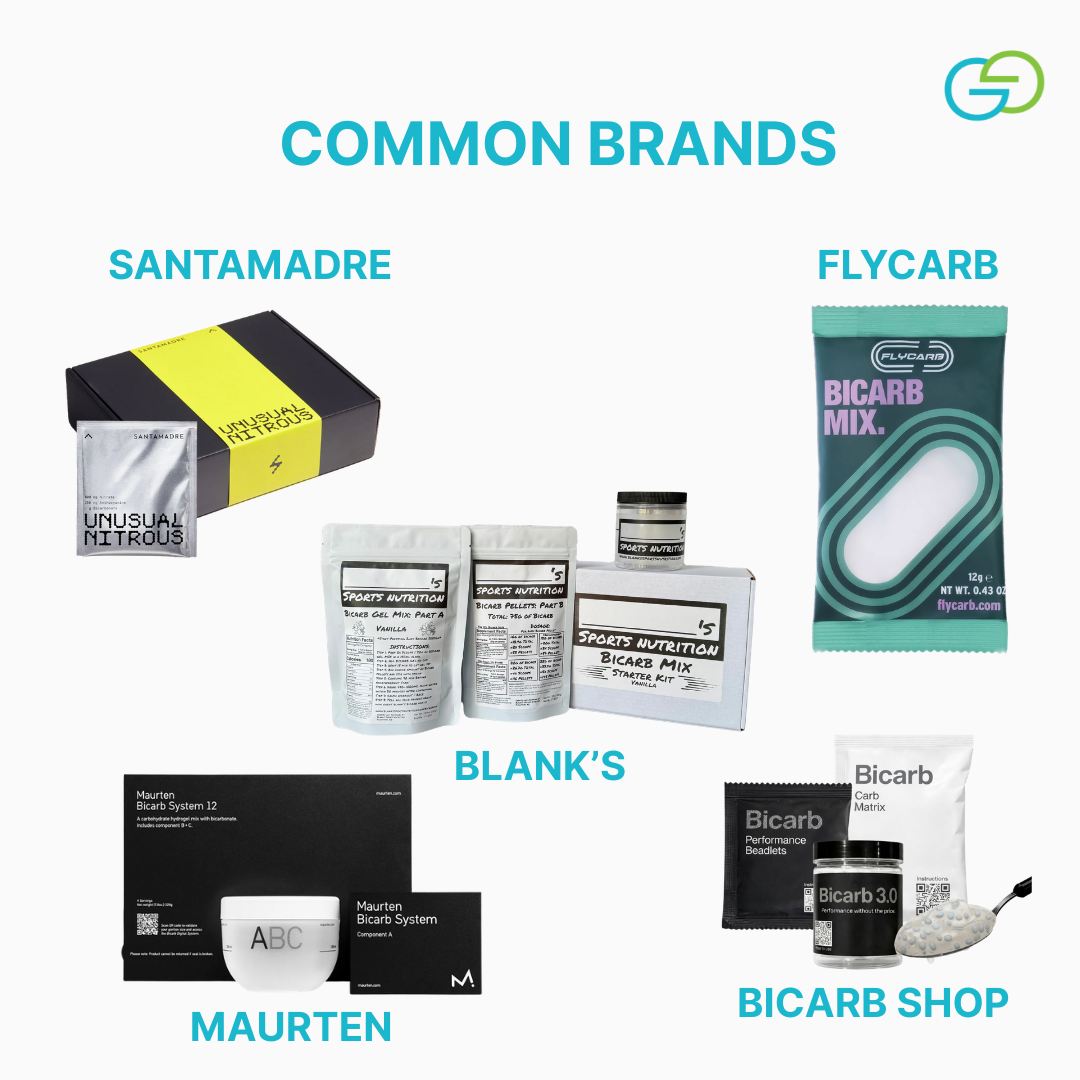
Why Might Athletes Consider It?
This is not a supplement that applies to every athlete or every sport.
Most of the research on sodium bicarbonate focuses on:
Short, high intensity efforts
Repeated sprint activities
Exercise lasting about 1 to 10 minutes
This could include:
Middle distance track events
Swimming
Rowing
High intensity interval training
Team sports with repeated bursts of effort
If your sport is more steady and endurance based, this is not where sodium bicarbonate is typically studied the most.
The Science Without Overcomplicating It
When exercise intensity increases, your body relies more on anaerobic metabolism to produce energy quickly.
This typically happens during short, intense efforts like sprinting or heavy lifts, where your body needs energy faster than oxygen can be delivered to the muscles.
One of the byproducts of this process is an increase in hydrogen ions.
Over time, this can lead to:
A drop in muscle pH, meaning a more acidic environment
Changes in how muscles contract
That heavy, burning sensation
A decrease in performance capacity
Sodium bicarbonate has been studied because it can increase the body’s ability to buffer these changes in the blood.
The idea is not that it removes the burn or fatigue, but that it may help delay some of the changes associated with it during certain types of exercise.
What Does the Research Say?
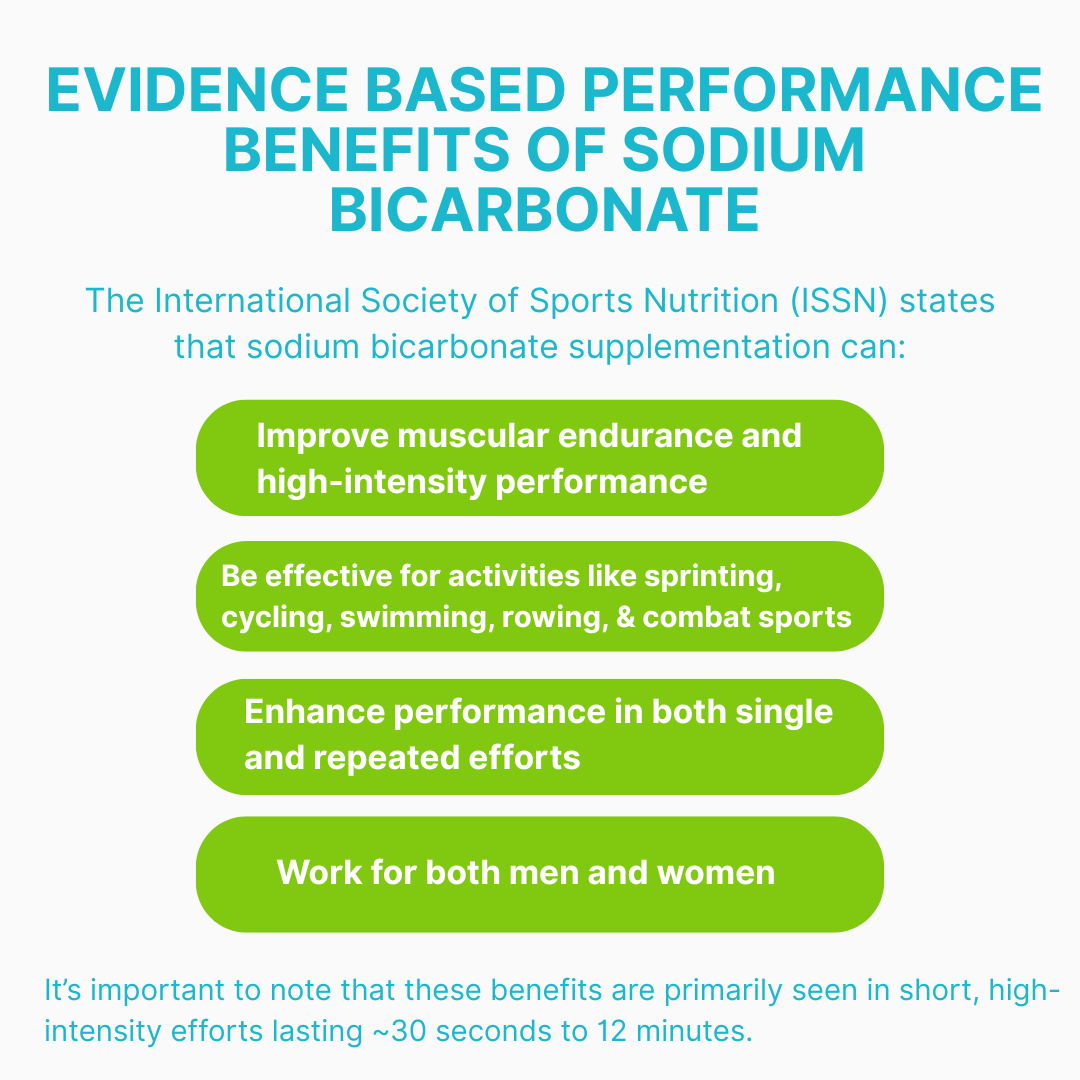
According to the 2021 position stand from the International Society of Sports Nutrition, sodium bicarbonate has been studied in relation to high-intensity exercise performance across a wide range of sports and exercise types.
Here’s what the research shows:
Sodium bicarbonate has been studied in doses ranging from 0.2–0.5 g/kg body weight, with performance improvements seen in high-intensity exercise, especially efforts lasting about 30 seconds to 12 minutes
This shows up in a lot of different sports, including boxing, judo, karate, taekwondo, wrestling, cycling, running, swimming, and rowing
Benefits have been seen in both single-bout efforts (one all-out effort) and repeated-bout efforts (think repeated sprints or intervals where you have to go again and again)
Research has shown effects in both men and women
Most of the benefits show up in situations where intensity is high and fatigue builds quickly
That said, responses aren’t identical across the board. Some athletes see a noticeable performance benefit, while others don’t respond as strongly.
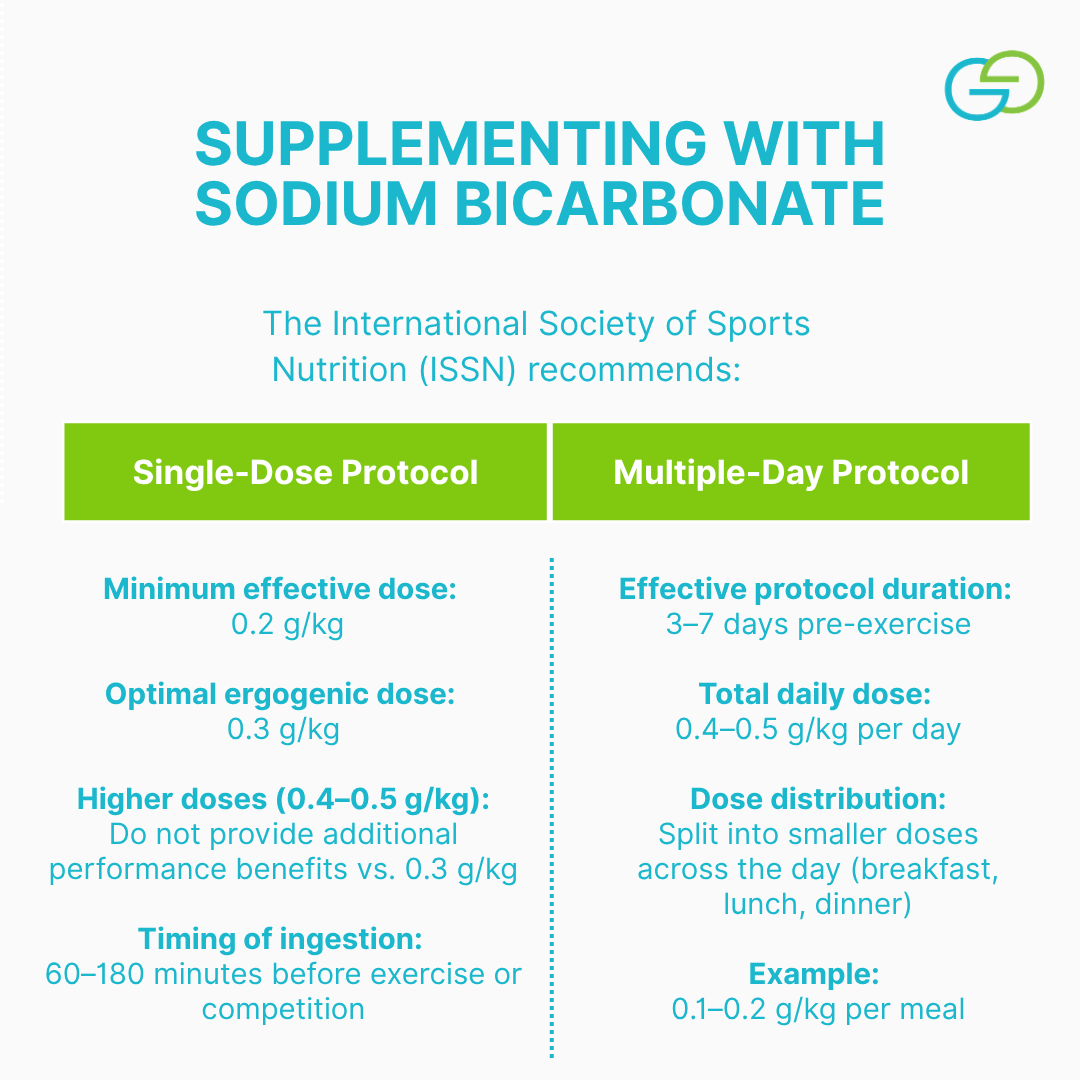
Supplementing with Sodium Bicarbonate (Dosing Strategies)
So if we take everything from the research and translate it into how it’s actually used, most of it comes down to dosing, timing, and how it’s structured.
Here’s what the research shows when it comes to supplementation strategies:
Single-dose approach
This is the most common setup used in performance research:
0.2–0.3 g/kg body weight is the typical single-dose range
0.2 g/kg is considered the minimum effective dose
0.3 g/kg is often identified as the optimal dose for performance benefits
Doses above this (0.4–0.5 g/kg) do not appear to improve performance further and increase the likelihood of side effects
Taken about 60–180 minutes before exercise or competition
Multi-day loading approach
Some protocols spread intake out instead of using one large dose:
Typically used for 3–7 days leading into performance
Total daily intake of about 0.4–0.5 g/kg per day
Dose is split across the day (for example: with breakfast, lunch, and dinner)
Used as another way to achieve performance benefits while distributing intake
Longer-term Use
Some research has also looked at regular use during training:
Taken before repeated training sessions over time
Has been associated with potential improvements in training adaptations like:
Increased time to fatigue
Higher power output
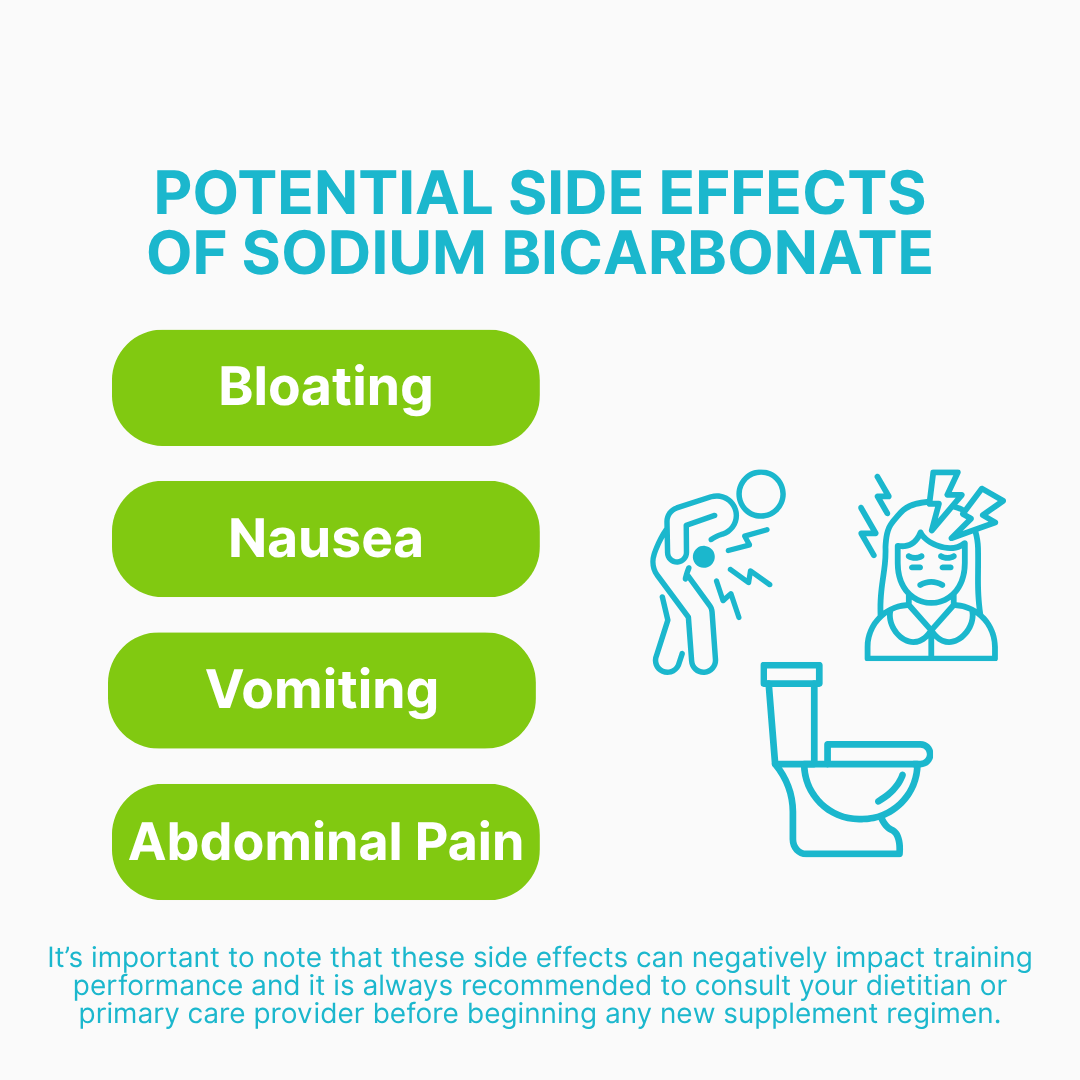
Potential Side Effects
This is one of the biggest things to consider.
The most commonly reported side effects of sodium bicarbonate are gastrointestinal issues, including:
Bloating
Nausea
Stomach discomfort
Diarrhea
Which is obviously not ideal before a training session or competition.
Because of this, tolerance can play a big role in whether this is something worth experimenting with.
Things to Think About Before Trying It
Sodium bicarbonate is not necessary for most athletes, and it is not a replacement for the basics.
Before considering supplements, focus on:
Consistent fueling
Hydration
Sleep
Training
If you are thinking about trying it:
Test it during training, not competition
Pay attention to how your body responds
Avoid trying anything new close to an event
The Bottom Line
Sodium bicarbonate is a simple compound that has been studied in the context of high intensity exercise.
Some research suggests it may provide small performance benefits in specific situations, while other research shows no significant effect. Individual response and tolerance vary, which is an important part of how it may or may not fit into an athlete’s routine.
If you are considering adding it to your routine, it is a good idea to talk with a sports dietitian or healthcare provider first to decide if it makes sense for you.
The goal is always to support performance in a way that works for your body, not just follow what someone else is doing.
If you want help identifying what might be holding you back and building a plan that supports your performance as a whole, book an intro call today with GracesGrit to learn individualized strategies to help support your performance!
References:
Grgic J, Pedisic Z, Saunders B, et al. International Society of Sports Nutrition position stand: sodium bicarbonate and exercise performance. J Int Soc Sports Nutr. 2021;18(1):61. Published 2021 Sep 9. doi:10.1186/s12970-021-00458-w
