

The Importance of Recognizing Eating Disorders in Sport
Eating disorders affect athletes at much higher rates than the general population. However, they can often go unnoticed and undertreated due to performance pressures, sport culture, and the normalization of disordered behaviors. Increasing awareness of these concerns is essential so that athletes are given a supportive environment that protects not only their performance, but health in and beyond sport!
How Common are Eating Disorders?
Prevalence of eating disorders can vary depending on age, sport, and gender. Female athletes have been the focus of existing research, with up to 45% estimated to struggle with an eating disorder. However, male athletes also face a meaningful risk, with up to 19% estimated to struggle with an eating disorder as well. This growing research highlights that eating disorders affect all types of athletes and it is crucial that they all get the support they deserve.
Why are Athletes at a Higher Risk?
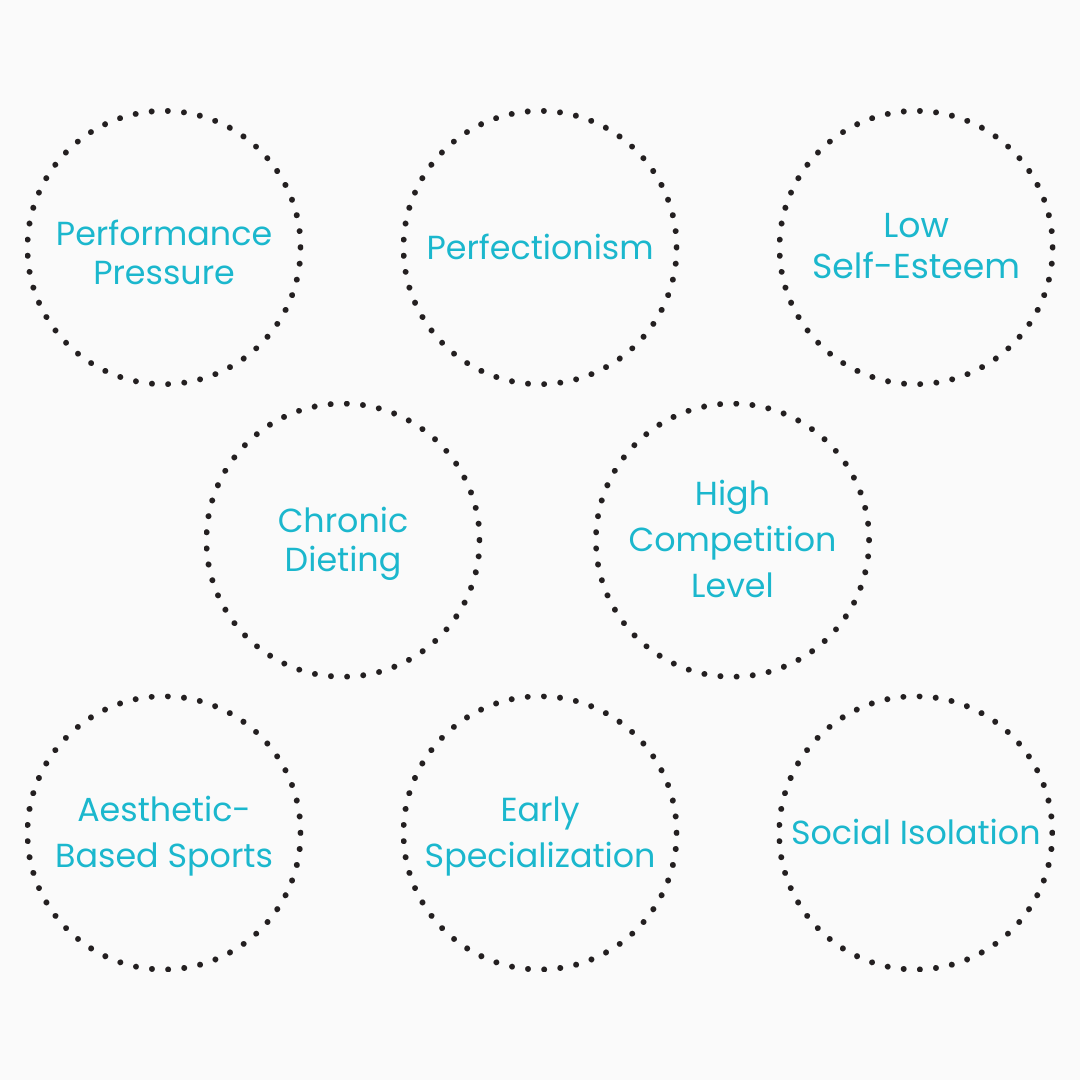
Athletes often experience a combination of factors that increase this risk of developing an eating disorder. These factors include a blend of physical demands, psychological traits, and environmental influences that make athletes particularly vulnerable. Here are some of the most common factors across sports.
What Research Reveals on Body Image and Fueling
Research on eating disorders is constantly evolving and consistently shows the unique variation in factors that place athletes at high risk for developing these serious conditions. It is important to go beyond the assumption that only certain sports are at serious risk and acknowledge how into how factors like age and body satisfaction play a role as well.
A 2023 study looked at over 200 female athletes between the ages of 12 and 30 years old. They found multiple associations within this population.They found that adolescent athletes are more vulnerable to developing eating disorders than adult athletes. Specifically, 4.6% of adolescent athletes screened positive for eating disorder risk while only 6.9% of adult athletes screened positive. This highlights the potential impact puberty-related factors and early sports experience can have on eating behaviors. When looking at body dissatisfaction, they found this to be a leading predictor of eating disorders in athletes when compared to factors like age and BMI. More so, the study looked at the role performance level has on eating disorders in sport. They found a higher risk associated with competing at the national level compared to the international level, with 58% of athletes at the national level being at risk of developing an eating disorder from their sport. This also highlights the need to consider how factors like coaching, performance expectations, and athletic identity may impact different levels of performance.
Impact on Body and Performance
Eating disorders can greatly impact the way the body functions and responds to training. The implications go beyond health, affecting an athlete’s hormones, strength, ability to recover, and overall performance. Here are some common consequences that athletes can experience:
Low Energy Availability: When energy needs are not met, the body does not have adequate fuel to function properly and perform successfully. If prolonged, this can lead to relative energy deficiency in sport, or RED-S, which impairs various functions ranging from reproductive function to muscle recovery to the way the body synthesizes glycogen. The longer the body lacks proper energy, the more these functions slow and make it even harder for athletes to perform and recover successfully.
Hormonal Disruption: Important hormones drop when the body is not receiving adequate fuel in an attempt to preserve energy and prioritize essential functions (heart, lungs, etc.). This can commonly impact thyroid, metabolic, and reproductive systems, leading to fatigue, menstrual irregularities, complete loss of cycles, and increased risk of injuries over time.
Decreased Strength and Increased Injury Risk: Inadequate intake and low glycogen availability can cause strength to decrease during activity because muscles lose their primary fuel source and the body cannot support performance. These factors can also lead to loss of body mass and down regulation of hormones, specifically ones involved in bone turnover. Because of this, athletes can lose bone density, which increases the risk of fractures and other overuse injuries -All of these factors in combination with each other can have major implications on the strength and performance of an athlete.
Greater Susceptibility To Illness: Under-fueling can impact the body’s ability to produce immune responses. Specifically, limited energy can reduce white blood cell production and raise cortisol, all of which can directly weaken the immune system. Because of this, athletes can become more susceptible to more colds, infections, and even general fatigue.
Recognize The Signs
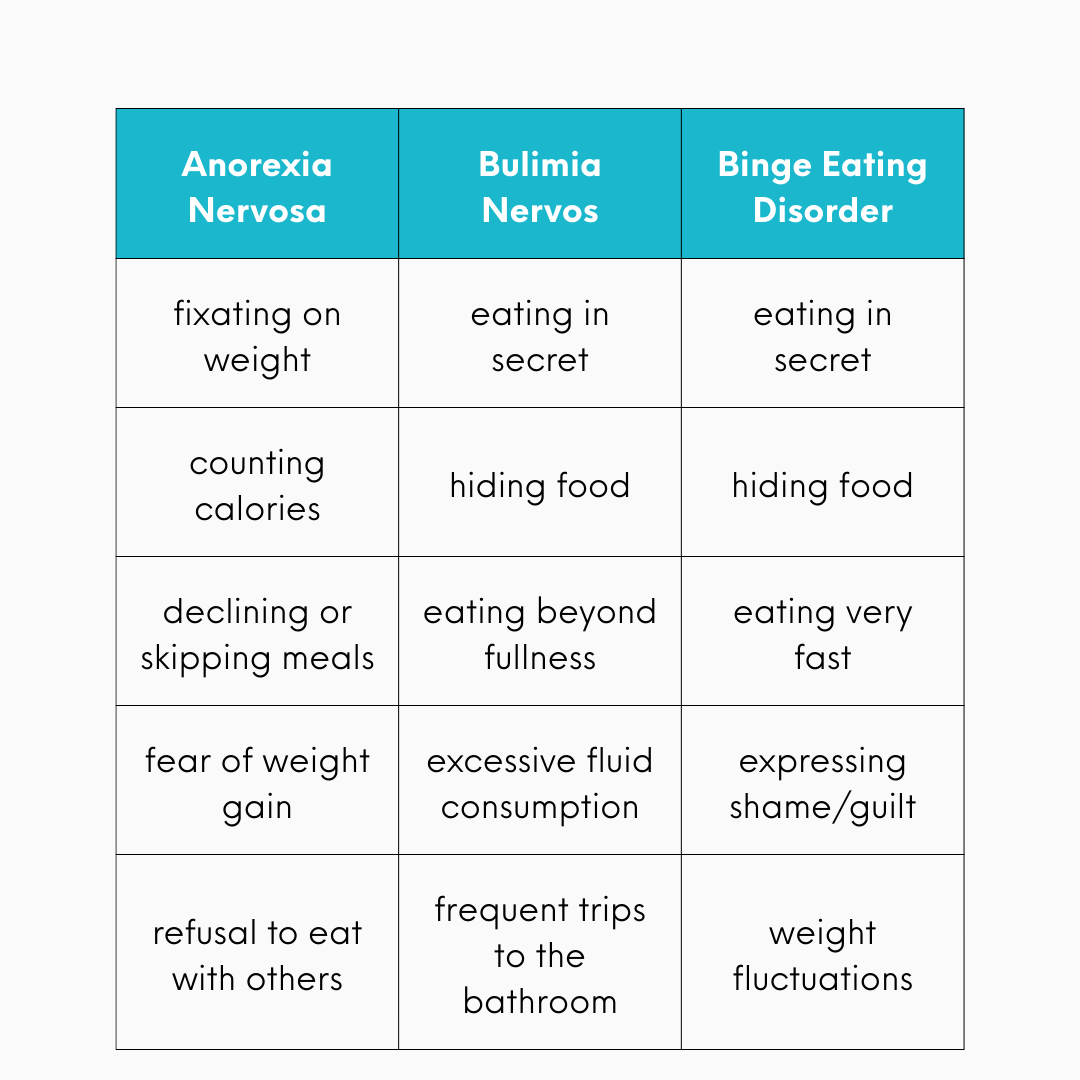
It is so important that individuals working with athletes can identify the patterns and warning signs of disordered eating. These patterns exhibited by athletes are often viewed as “discipline” and “commitment” when in reality the subtle changes in mood, training habits, and even teammate interactions can be a sign that the athlete is struggling. It is important to note that an athlete presenting with one of these signs does not automatically diagnose an eating disorder, but it can create an opportunity to check in and offer support before an issue progresses. Not every athlete with an eating disorder will look the same but early detection is crucial to providing athletes with supportive care so that they get the help they deserve.
The Bottom Line:
Eating disorders in sport are extremely common and often more complex than they appear. Understanding what puts athletes at risk, how they develop, and recognizing the signs will ensure we are doing our best to make sure they do not go unnoticed. When athletes feel supported and are educated with open conversations about the importance of fueling and recovery, they are better equipped to perform on and off the field.
Feeling like you may be struggling with disordered eating? Maybe you know an athlete exhibiting these signs? Book an intro call today and let’s chat about how GracesGrit can help you overcome your eating disorder and get you back to performing at your best!
References:
Nickols, R. (2024, March 8). Eating Disorders and Athletes - National Eating Disorders Association. National Eating Disorders Association. https://www.nationaleatingdisorders.org/eating-disorders-and-athletes-2/
Bonci, C. M., Bonci, L. J., & Granger, L. R. (2008). g by the National Athletic Trainers’ Association, Inc www.nata.org/jat. Journal of Athletic Training, 43(1), 80–108. https://www.nata.org/sites/default/files/2025-08/preventing_detecting_and_managing_disordered_eating_in_athletes.pdf
Drabkin, A., Rothman, M. S., & Wassenaar, E. (2017). Assessment and clinical management of bone disease in adults with eating disorders: a review. Journal of Eating Disorders, 5(1). https://doi.org/10.1186/s40337-017-0172-0
Rittenhouse, M. (2025, November 25). Eating Disorders in Athletes - Eating Disorder Hope. Eating Disorder Hope. https://www.eatingdisorderhope.com/risk-groups/eating-disorder-athletes#ib-toc-anchor-1
Puscheck, L. J., Kennel, J., & Saenz, C. (2025). Evaluating the prevalence of eating disorder risk and low energy availability risk in collegiate athletes. Journal of Eating Disorders, 13(1). https://doi.org/10.1186/s40337-025-01218-w
