

Types of energy gels
Not sure which gel is right for you? With so many options on the market, it can feel overwhelming when deciding what gels to use.
Energy gels all serve the same basic purpose: providing quick carbohydrates that are easily absorbed, but the type of gel you choose can make a big difference in how you feel. This blog breaks down each type of gel and what to consider so you can fuel smarter and perform your best!
Types of Gels:
Hypertonic Gels
Hypertonic gels are highly concentrated carbohydrate gels. They have a thicker, gooey texture. They deliver more carbohydrates per serving than other gels, but they must be taken with fluids to avoid GI distress during training.
Carbohydrate content:
Typically 25+ g per gel
What they’re used for:
Long duration training/races when water is available
When athletes energy needs are higher
Other considerations:
Can cause GI distress if taken incorrectly
Texture is not always tolerated
Common brands:
Gu Energy
Honey Stingers
Styrkr
Amacx
Isotonic Gels
Isotonic energy gels have a thinner consistency and are formulated to match the concentration of body fluids. This prevents water from being pulled into the gut when consumed, avoiding GI discomfort and cramping. This also means that they can be taken alone without needing fluids. Isotonic gels are considered easy on the stomach and a common choice for many athletes.
Carbohydrate content:
Typically 22-25 g per gel
What they’re used for:
During high intensity/long duration training
When athletes are unable to drink water
For athletes with GI sensitivity
Other considerations:
Low carb content may require more frequent fueling
Thin consistency makes consuming easier during races
Common brands:
Science in Sport
Maurten Gel
NeverSecond
Electrolyte-Enhanced Gels
Electrolyte-enhanced gels contain added sodium (and sometimes potassium or magnesium) to support hydration during training. The combination of carbohydrates and electrolytes helps replace sweat losses and reduce the risk of cramping during hotter or more intense sessions.
Carbohydrate/Sodium content:
Typically 20-25 g per gel (similar to hypertonic gels)
Typically 50-100 mg sodium
What they’re used for:
Hot and humid conditions
Heavy sweaters
Other considerations:
Not a replacement for fluids
Common brands:
Science in Sport
Gu Energy
Carbs Fuel
Caffeinated Gels
Caffeinated gels are standard gels with added caffeine to enhance mental and physical performance. The well-studied ergogenic aid can increase alertness and help maintain endurance.
Carbohydrate/Caffeine Content
Typically 20–25 g per gel
Typically 20-100 mg caffeine
What they’re used for:
Late in runs/races when mental fatigue sets in
Before or during a hard training session/race
Other considerations:
Caffeine tolerance varies and can cause nausea or jitteriness
Best to practice with gels before using in competition
Pair with fluids to prevent dehydration
Not ideal for athletes who train late or have sleep difficulty
Common brands:
Precision Fuel
Unived
HNY+
Real Food Gels
Real‑food gels contain whole‑food ingredients like fruit purées, maple syrup, and honey to provide carbohydrates. They can also include additional components like chia seeds to provide additional fiber. These gels are ideal for athletes who prefer simple, natural ingredients.
Carbohydrate Content
Typically 16–40 g per gel
What they’re used for:
Athletes with sensitive stomachs
Athletes who prefer natural ingredients over processed gels
Ultra runners who can tolerate a little bit of fat and protein
Other considerations:
Fiber content can affect athletes diffferently
Texture can be different depending on brand
Common brands:
Huma
Lecka
Muir Energy
Reliable Brands To Choose From:
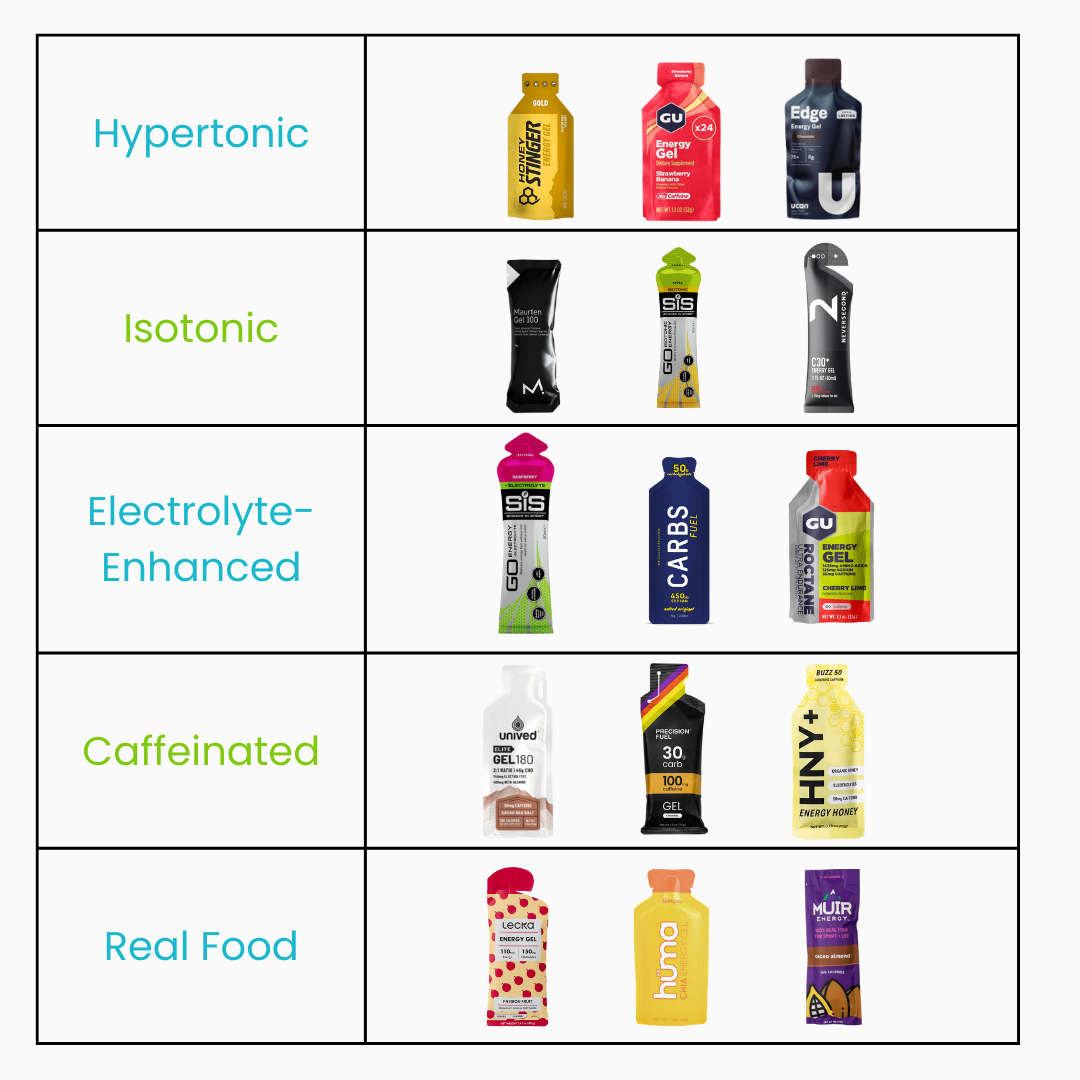
Common Mistakes Athletes Make
There are a variety of mistakes athletes can make when taking gels. Unfortunately, these small mistakes can make a big difference in performance when they are not corrected. Here are a few common mistakes athletes tend to make and the implications they have.
Using gels too often: In fear of running out of energy, athletes can over consume gels faster than their body can absorb which can cause GI upset and altered performance
Fueling too late: On the other hand, some athletes wait too long to fuel until they are noticeably tired. By that time, the body does not have adequate time to digest and utilize the carbohydrates meant to support energy levels. Fueling should be consistently every 20-30 minutes.
Not taking gels with water: Standard or hypertonic gels require fluids to be consumed with them to be digested properly. Failing to do this can cause cramping and GI upset.
Trying new gels on race day: Trying out a gel for the first time on race day is risky. The digestive system is already compromised under stressful conditions, like a race, so introducing a new gel into the mix may cause unpleasant symptoms. It is best to stick to what your body knows and trial new products during training sessions.
The Bottom Line:
There is no universal “best” gel, but there is the best the one that fits you. Carbohydrate, electrolytes, and caffeine content matter, but it is also important to consider details like your own GI tolerance, the textures and flavors that you tolerate, your training conditions, and what makes sense for your budget. The best strategy is to test a few options and track how your body responds. Want to build a fueling plan that is tailored to your training needs, book an intro call with GracesGrit today!
References:
Energy Gels. (2026). Thefeed.com. https://thefeed.com/search?query=energy%20gels
Admin, K. (2026, February 3). Common Energy Gel Mistakes and How to Avoid Them - EuFit. EuFit. https://www.eufit.io/sports/running/common-energy-gel-mistakes/
