

Supplements for Recovery: What the Research Says for Athletes
If you’re noticing decreased performance, chronic soreness, frequent illness, or persistent fatigue, it may be because your body isn't fully recovering from exercise.
Recovery is a vital aspect of performing at a high level and encompasses multiple factors, including hydration, rest, and nutrition. To meet nutrition needs, athletes should prioritize eating balanced meals and fueling their bodies throughout the day. It’s also important to recognize that genetics, training load, and environmental factors influence nutrient status and absorption. Therefore, supplementation may be used as an additional boost on top of a solid nutrition foundation.
Well Researched Supplements
Supplements are not necessary for all athletes, but there are 7 supplements well studied in research for their role in recovery. Magnesium, protein powder, recovery shakes, creatine, tart cherry juice, fish oil, and vitamin D offer benefits ranging from improved sleep to reduced muscle soreness. Below, we’ll explore what these supplements do and when it may be appropriate to take them.
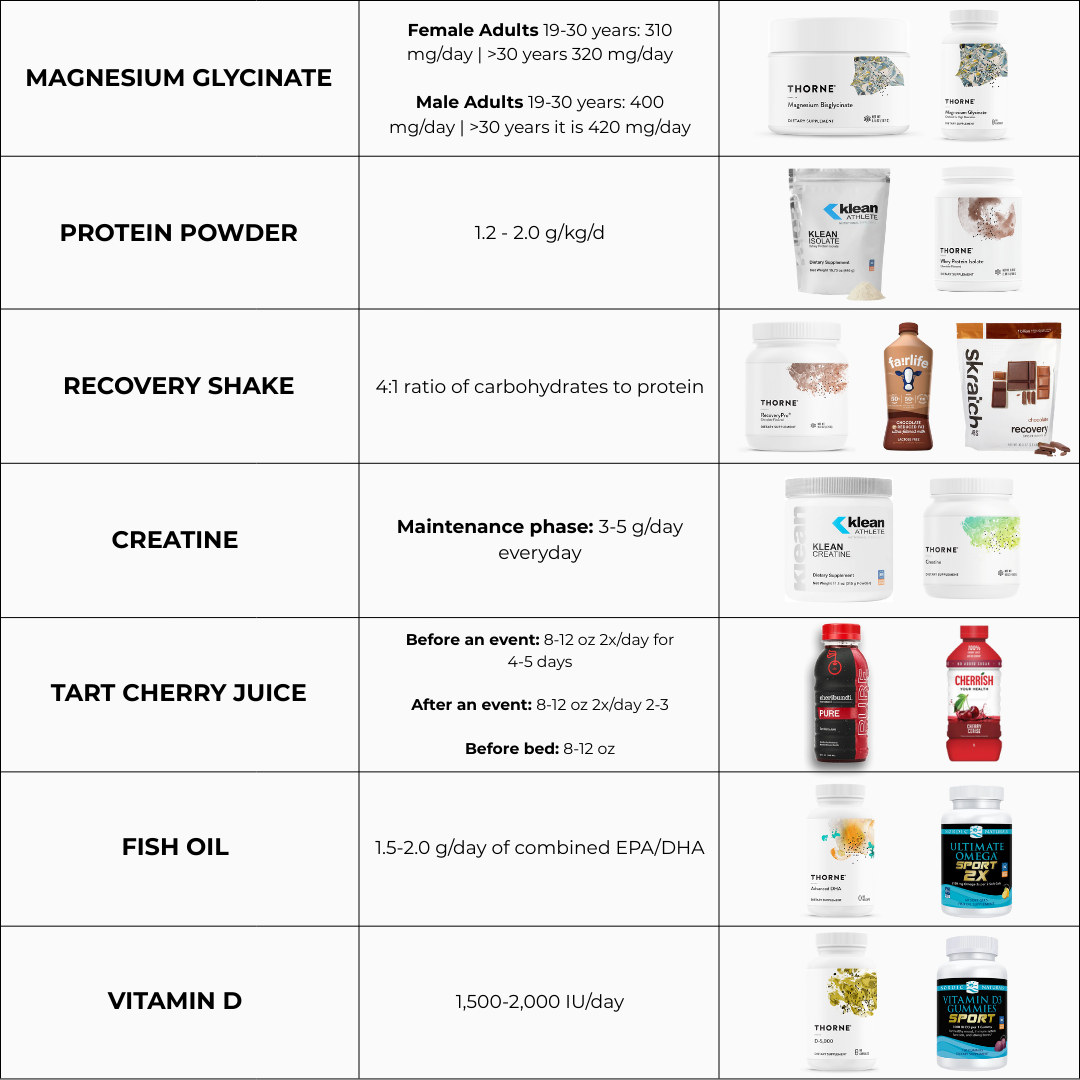
Magnesium
Magnesium has many functions in the body and is involved in over 300 metabolic reactions, including energy production, nervous system regulation, the immune system, and muscle contraction and relaxation. Research suggests magnesium supplementation may help decrease muscle soreness. This is because intracellular magnesium is necessary for the calcium transport system, which regulates muscle contraction. During prolonged exercise, magnesium stores become depleted, potentially inhibiting calcium release, leading to muscle soreness. Depleted magnesium may lead to further glucose depletion from exercise and increase lactate accumulation. Consuming sources of magnesium may help combat this soreness.
Sources: cow’s milk, fortified orange juice, oily fish, egg yolk
Recommended intake:
Female adults 19-30 years: 310 mg/day | >30 years 320 mg/day
Male adults 19-30 years: 400 mg/day | >30 years 420 mg/day
Reference range Magnesium RBC:
Standard: 4.2-6.8 mg/dL
Athlete Optimal: 5.2-6.8 mg/dL
Reference range Magnesium
Standard: 1.5-2.5 mg/dL
Athlete Optimal: 1.9-2.3 mg/dL
Brands to Look For:
Thorne Magnesium Bisglycinate
Thorne Magnesium Glycinate
Protein Powder
After exercise, intramuscular protein oxidation and protein breakdown occur. Consuming adequate protein supports muscle preservation and growth, making it essential for recovery. Research also indicated that post-exercise protein intake can positively impact immune health. Protein recommendations vary based on intensity and exercise type. Exceeding protein recommendations may unintentionally displace carbohydrate intake, which is critical for glycogen depletion and recovery. Protein powder is not required, but it can be a useful way to increase protein throughout the day. It can also elevate many foods that are already being consumed. Adding protein powder to smoothies, yogurt, overnight oats, muffins, protein bites, or pancakes is just a few ways to incorporate your protein powder.
Sources: chicken, beef, fish, eggs, nuts, seeds
Recommended intake:
1.0-2.0 g/kg/day, depending on body weight, training intensity, and body composition goals
Endurance exercise: 1.0 - 1.6 g/kg/day
Strength/power exercise: 1.6-2.0 g/kg/day
Intermittent exercise: 1.4-1.7 g/kg/day
Brands to Look For:
Klean Athlete Isolate Whey Protein
Thorne Whey Protein Isolate
Recovery Shake
A recovery shake typically contains a 3:1 or 4:1 ratio of carbohydrates to protein. After exercise, energy has been used, and glycogen stores have been depleted, while muscle tissue needs to be repaired. The carbohydrate content replenishes glycogen stores, while protein supports muscle synthesis, making it a great post-workout drink. The ratio is effective in recovery as it targets muscle repair and glycogen repletion. Evidence shows that consuming carbohydrates and protein together improves recovery compared to carbohydrates or protein alone. The ideal time to consume a recovery shake should be within 30 minutes post-exercise. This helps initiate the recovery process and provides a buffer until a full meal is consumed. These shakes travel well and can be easily added to a gym bag, allowing recovery to start as soon as a workout ends or in between a run and lift.
Sources: chocolate milk
Brands to Look For:
Thorne RecoveryPro
Skratch Recovery
KleanAthlete Recovery
Creatine
Creatine is an extensively researched supplement in sports nutrition with numerous benefits ranging from increased training output to cognitive benefits. Supplementing creatine adds to what is already made in the body. Phosphocreatine stores in the muscle increase, which enhances ATP regeneration. It carries energy to cells in the body. This enables higher power output and repeated bouts of exercise in short, high-intensity efforts. With this, creatine supports quicker recovery between sets, improving training quality throughout exercise. Through both these impacts, greater strength is built. Additionally, studies support that creatine supplementation may help inhibit exercise-induced increases in inflammatory markers.
Beyond performance, creatine also supports brain energy metabolism with potential benefits for cognitive performance and reduced mental fatigue. It is safe for long-term use in healthy individuals and does not require a loading phase, but should be taken consistently every day.
Sources: red meat, seafood, cow’s milk
Recommended Intake:
3-5 g/day, taken consistently
Brands to Look For:
Thorne Creatine
Klean Athlete Creatine
Tart Cherry Juice
Tart cherry juice is rich in polyphenols, which are antioxidants that can reduce oxidative stress and inflammation. Research shows inflammatory markers decrease when consuming tart cherry juice, which may decrease delayed muscle soreness following intense exercise. Additionally, tart cherries contain naturally occurring melatonin. Evidence supports that consuming tart cherry juice can increase total sleep time, improve sleep efficiency, and slightly reduce the time between bedtime and the time awake after initial sleep. Improving sleep can help the athlete prepare for an event or allow the body to recover afterwards. It is recommended to consume a concentrated version of tart cherry juice to receive its benefits.
Recommended Intake:
Before an event: 8-12 oz 2x/day for 4-5 days
After an event: 8-12 oz 2x/day 2-3 days after to reduce inflammation
Before bed: can be consumed for its natural melatonin effects
Brands to Look For:
Cherish
Cherribundi
Plain Tart Cherry Juice - Whole Foods, Kroger, Aldi
Fish Oil
Omega-3 fatty acids impact many human functions, including oxidative stress, immune function, and neuromuscular functions. As a result, they impact outcomes related to recovery, risk of illness, and performance. There are three types of omega-3 fatty acids: ALA, EPA, and DHA. EPA and DHA are found in fish oil. While ALA can be converted to EPA/DHA, the conversion is poor, and ALA is less bioavailable. The benefits of EPA and DHA have been shown to increase the structural integrity of muscle cell membranes and reduce inflammatory markers after exercise. This may impact muscle soreness and contribute to recovery.
Sources: (EPA/DHA) salmon, mackerel, sardines, tuna; (ALA) walnuts, flaxseeds, chia seeds
Recommended Intake:
1.5-2.0 g/day of combined EPA/DHA
Brands to Look For:
Thorne Advanced DHA NSF
Nordic Naturals Ultimate Omega Sport 2x NSF
Vitamin D
Vitamin D plays a key role in bone strength, inflammation, and immunity, making it especially important for athletes. It inhibits pro-inflammatory cytokine production and is required for muscle fiber contraction and protein synthesis. Therefore, suboptimal Vitamin D levels increase the risk of injury, acute illness, and poor performance. It is likely that dietary sources alone will not meet sufficient levels of vitamin D. Sun exposure typically leads to sufficient vitamin D synthesis and status. Exposure should be for 5-30 minutes a day without sunscreen. The use of sunscreen during those 30 minutes may block the body’s ability to effectively make vitamin D. However, not all athletes get that exposure. Sun exposure and regular vitamin D supplementation, or dietary intake, sun exposure, and supplementation may help achieve optimal vitamin D status. Vitamin D supplementation recommendations vary between athletes depending on vitamin D levels when assessed.
Routine assessment can be useful to determine if supplementation is needed. When assessing vitamin D status, 25(OH)D concentration is the best indicator. To maximize absorption, vitamin D should be taken with a fat such as nuts, dairy, eggs, or avocado. Additionally, some evidence supports that supplementation of vitamin D and vitamin K combined works as a protective agent in bone mineral density.
Sources: direct sunlight, cod liver oil, salmon, mackerel, sardines, egg yolk, UV-exposed mushrooms, fortified cow’s milk, and fortified orange juice
Maintenance Intake:
1,500-2,000 IU/day if not getting adequate sun exposure
Initial dosage varies based on the athlete’s vitamin D level
Reference range:
Standard: 30-100 ng/mL
Athlete Optimal: 50-100 ng/mL
Brands to Look For:
Thorne Vitamin D + K2 Drops NSF
Nordic Naturals Vitamin D3 Sport NSF
Why the Supplement Brand Matters
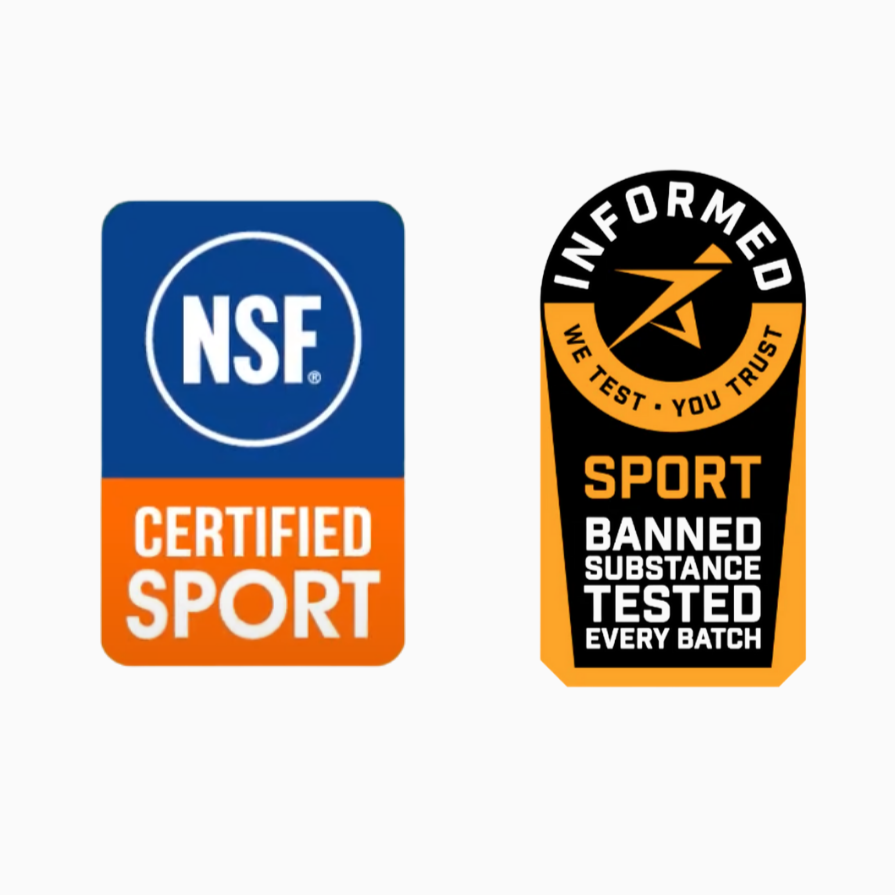
When choosing a supplement, it is important to ensure it is safe, high-quality, and has an accurate label. The FDA regulates supplements as food, meaning supplement companies are largely responsible for evaluating the safety and labeling of their product. Third-party testing was introduced as a way for companies to communicate with consumers that they have validated their product. As an athlete, it is especially important to choose third-party-tested, certified-for-sport products. This ensures products are safe and free of nearly 300 banned substances for athletes. Look for:
NSF Certified for Sport (blue and orange logo)
Informed Sport (black and orange logo)
Always do diligent research and consult a Dietitian before starting a supplement. Supplements can be a helpful tool, but they are used at the athlete's own risk.
The Bottom Line:
Athlete recovery is influenced by many factors and nutrients. Supplements can help in recovery, but they aren’t always necessary or a replacement for a balanced diet. Focus on adequate intake of all food groups and consider supplements as a strategic addition.
If you are questioning your nutrient status and its potential impact on your recovery, schedule an initial consultation today!
Learn more about supplements for recovery for athletes on our Instagram.
References:
Aaseth, J. O., Finnes, T. E., Askim, M., & Alexander, J. (2024). The importance of vitamin K and the combination of vitamins K and D for calcium metabolism and bone health: A review. Nutrients, 16(15), 2420. https://doi.org/10.3390/nu16152420
Bell, P. G., Stevenson, E., Davison, G. W., & Howatson, G. (2016). The effects of Montmorency tart cherry concentrate supplementation on recovery following prolonged, intermittent exercise. Nutrients, 8(7), 441. https://doi.org/10.3390/nu8070441
Ben Maaoui, K., Delleli, S., Mahdi, N., Jebabli, A., Del Coso, J., Chtourou, H., Ardigò, L. P., & Ouergui, I. (2025). Effects of creatine monohydrate loading on sleep metrics, physical performance, cognitive function, and recovery in physically active men: A randomized, double-blind, placebo-controlled crossover trial. Nutrients, 17(24), 3831. https://doi.org/10.3390/nu17243831
Campbell, B., Kreider, R. B., Ziegenfuss, T., La Bounty, P., Roberts, M., Burke, D., Landis, J., Lopez, H., & Antonio, J. (2007). International Society of Sports Nutrition position stand: Protein and exercise. Journal of the International Society of Sports Nutrition, 4, Article 8. https://doi.org/10.1186/1550-2783-4-8
Gratwicke, M., Miles, K. H., Pyne, D. B., Pumpa, K. L., & Clark, B. (2021). Nutritional interventions to improve sleep in team-sport athletes: A narrative review. Nutrients, 13(5), 1586. https://doi.org/10.3390/nu13051586
Kreider, R. B., Kalman, D. S., Antonio, J., Ziegenfuss, T. N., Wildman, R., Collins, R., … Lopez, H. L. (2017). International Society of Sports Nutrition position stand: Safety and efficacy of creatine supplementation in exercise, sport, and medicine. Journal of the International Society of Sports Nutrition, 14(1), Article 18. https://doi.org/10.1186/s12970-017-0173-z
Larson-Meyer, E. (2015). The importance of vitamin D for athletes. Sports Science Exchange, 28(148), 1–6.
National Center for Biotechnology Information. (2020). Omega-3 fatty acids and recovery. Nutrients. https://pmc.ncbi.nlm.nih.gov/articles/PMC7760705/
National Institutes of Health, Office of Dietary Supplements. (n.d.). Magnesium: Recommended dietary allowances (RDAs). https://www.ncbi.nlm.nih.gov/books/NBK545442/table/appJ_tab3/
NSF International. (n.d.). Supplement and vitamin certification. https://www.nsf.org/consumer-resources/articles/supplement-vitamin-certification
Springer Nature. (2025). Protein supplementation and recovery. Sports Medicine. https://link.springer.com/article/10.1007/s40279-025-02213-6
Tarsitano, M. G., Quinzi, F., Folino, K., Greco, F., Oranges, F. P., Cerulli, C., & Emerenziani, G. P. (2024). Effects of magnesium supplementation on muscle soreness in different types of physical activities: A systematic review. Journal of Translational Medicine, 22(1), 629. https://doi.org/10.1186/s12967-024-05434-x
Wax, B., Kerksick, C. M., Jagim, A. R., Mayo, J. J., Lyons, B. C., & Kreider, R. B. (2021). Creatine for exercise and sports performance, with recovery considerations for healthy populations. Nutrients, 13(6), 1915. https://doi.org/10.3390/nu13061915
Williams, M., Raven, P. B., Fogt, D. L., & Ivy, J. L. (2003). Effects of recovery beverages on glycogen restoration and endurance exercise performance. Journal of Strength and Conditioning Research, 17(1), 12–19. https://doi.org/10.1519/1533-4287(2003)017
